Category: Yleinen
The classic story about a Harvard business graduate and a poor Mexican fisherman
On his well-earned holiday, a Harvard business graduate watched how a small fishing boat approached the harbor in a small coastal Mexican village. It was still late morning but the boat was full of fish so he asked how long time did it take to catch them?
”A few hours.”
”And what are you going to do now?”
”You know, the usual: Play around with my kids, have some quality time with my wife during the siesta. Stroll around the village in the evening hanging out with my amigos, drinking some wine, playing my guitar.”
Upon hearing this the successful business man knew that he could help the poor fellow:
”You know, I am a Harvard business graduate. If you follow my advice you could change your life!”
”What do you mean?”
”With that amount of fishing you can support your current lifestyle, right?”
”Yes, quite much so.”
”Then, if you would work also the afternoons you could use the gained extra money for investments. Soon you could by another boat and hire some guys to run it. Your revenues would increase again and soon you would be operating a fleet of fishing boats.”
”And then what?”
”Then you could leave the fishing to the others and concentrate on the business part. You could cut out the middle man by selling directly to American distributors. You would of course have to relocate to LA or New York but that would be a necessary sacrifice for the success that awaits you.”
”And then what?”
”By working hard you could be a millionaire in twenty or so years.”
”And then what?”
”Then comes the best part: You would sell it all, cash in the money and retire into a small coastal fishing village where you could just play around with your kids, have some quality time with your wife, stroll around the village in the evenings and hang out with your friends, drinking some wine and playing the guitar.”On his well-earned holiday, a Harvard business graduate watched how a small fishing boat approached the harbor in a small coastal Mexican village. It was still late morning but the boat was full of fish so he asked how long time did it take to catch them?
”A few hours.”
”And what are you going to do now?”
”You know, the usual: Play around with my kids, have some quality time with my wife during the siesta. Stroll around the village in the evening hanging out with my amigos, drinking some wine, playing my guitar.”
Upon hearing this the successful business man knew that he could help the poor fellow:
”You know, I am a Harvard business graduate. If you follow my advice you could change your life!”
”What do you mean?”
”With that amount of fishing you can support your current lifestyle, right?”
”Yes, quite much so.”
”Then, if you would work also the afternoons you could use the gained extra money for investments. Soon you could by another boat and hire some guys to run it. Your revenues would increase again and soon you would be operating a fleet of fishing boats.”
”And then what?”
”Then you could leave the fishing to the others and concentrate on the business part. You could cut out the middle man by selling directly to American distributors. You would of course have to relocate to LA or New York but that would be a necessary sacrifice for the success that awaits you.”
”And then what?”
”By working hard you could be a millionaire in twenty or so years.”
”And then what?”
”Then comes the best part: You would sell it all, cash in the money and retire into a small coastal fishing village where you could just play around with your kids, have some quality time with your wife, stroll around the village in the evenings and hang out with your friends, drinking some wine and playing the guitar.”
Meaningful lives: Gioconda Belli – a poet, a revolutionary, a lover and a mother
At twenty she was a bourgeois upperclass girl, married and with one child, living just the kind of ordinary life that was expected of her. At twenty-four she had published an award-winning book of poetry that shocked with its erotic imagery – and was tailed by secret police because she had joined Sandinistas, a rebellious underground organization working to overthrow the dictatorship. In her autobiography she describes intimate conversations with poets and political leaders such as Fidel Castro, who took an interest in her, – and intimate love affairs with guerrilla warriors cut short by death. The Nicaraguan Gioconda Belli (born 1949) has lived quite an extraordinary life. It almost seems that she has lived a few separate lives and in fact that was what she herself felt from time to time.
Hers is a life of opposites: Combining undercover revolutionary activities and love affairs with guerrillas with motherly responsibilities of taking care of small children is a hard task. But she couldn’t help to notice how irresistible a strong man with a mission and with death written on his forehead can be. At one point she tells about how she made love to a guerrilla warrior called Marcos – who was gunned down in the backseat of a car a few years after – and how before lovemaking on the cold, hard floor of his hideout he ”placed the gun and the case with the hand grenade against the wall”. Marcos wants her to stay the night but she refuses because she has to tend her daughters. And half an hour after this passionate and secret love scene she is again the bourgeois mother cuddling with her daughters.
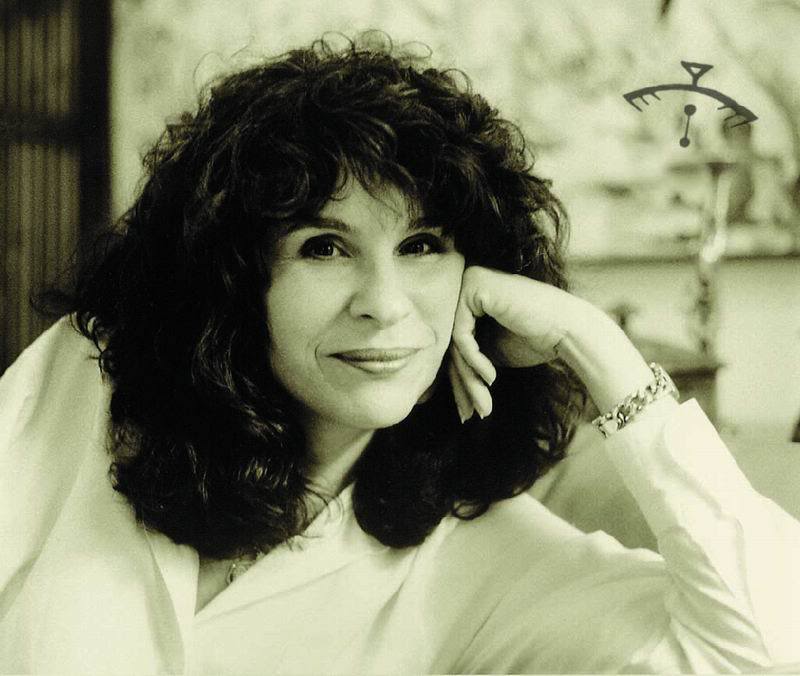
Reading her autobiography it becomes clear that what made all the difference to her life was the fact that Gioconda Belli is that relatively rare kind of person who thrives strongly on meaningfulness. In her twenties she realized that her desire for meaningful existence is so overwhelming that she is willing to jeopardize everything she has – her family life and even her own life – in her pursuit for it. When she is about to join the clandestine Sandinista movement she backs up a few times because of being afraid of the very real consequences. But then, ”all of a sudden, I realized I was on the verge of closing a door that was my only way into a more meaningful existence.” She gathers her courage and takes a step out of the bourgeois life, into the life-threatening world of a revolutionary movement within a dictatorship.
Because of her bourgeois public image she becomes the courier who passes important messages from one part of the organization into another. The life of a rebel is hard, many were the companions that suddenly were killed and whom she had to grief in secret in order to not reveal herself. And these losses hurt:
”At some point I fell apart, and began weeping in despair. The intensity of the pain startled me – it was as if one of my own brothers had died, someone close that I loved and not a person I barely knew. That was when I understood how strong the bond between those of us who were in the struggle was: we were a team, a unit.”
This was when she learned about the killing of Ricardo Morales Avilés and Oscar Turcios, persons she had only met briefly a few times. Later on she would loose a man she passionately loved. That pain stayed with her for years.
Despite its dangers, the rewards this lifestyle gave made it impossible to stop. The bond with the organization was so strong, participation in the revolution filled one’s existence with such a insurmountable sense of purpose, direction and meaningfulness that it justified all the sacrifices. At some points even she herself was baffled by how deeply she had connected her faith and identity with the revolutionary cause:
”Were we all mad? What mystery in human genes accounted for the fact that men and women could override their personal survival instincts when the fate of the tribe or the collective was at stake? What was it that enabled people to give their lives for an idea, for the freedom of others? Why was the heroic impulse so strong? What I found most bewildering and extraordinary was the real happiness and fulfillment that came along with commitment. Life acquired unequivocal meaning, purpose, and direction. It was a sensation of complete, utter complicity, a visceral, emotional bond with hundreds anonymous faces, an intimacy of multitudes in which any feeling of loneliness or isolation simply evaporated. In the struggle for everyone’s happiness, the first happiness one found was one’s own.”
There are many ways to go through the human existence. Martin Seligman separates between three forms of happy life: The pleasant life, where one chases after pleasures and happy emotions; a life of engagement where one’s existence is filled with some activities into which one is absorbed; and a meaningful life where one has a sense of working towards goals that transcend oneself. Of these three, the last-mentioned provides most solid forms of happiness according to Seligman. And if one wants to learn what this meaningful existence is all about, I can’t think of a much better book than Gioconda Belli’s autobiography ’The Country Under My Skin – A Memoir of Love and War’. In her life the innate search for meaningful existence is combined with a unique historical situation provided by the revolutionary movement to follow those instincts to the max – and an ability to carefully reflect the psychological landscapes in which these desires for purpose dwelled.

What we learn from Belli is that if you have a change to find a purpose you could believe in, a cause you can strongly identify with, values you are willing to sacrifice your life for, then be prepared: Chasing them can lead to unimaginable forms of fulfillment and happiness. The highpoint of Belli’s life as a revolutionary is encountered in 1979 when the freedom fighters had taken control of the capital and the dictator had fled. After living in exile for four years and using her time to handle press relations and gather international support for the Sandinistas, Gioconda Belli was finally able to return to her beloved home country, to the streets of Managua:
”And so we began yelling out ’Freedom’ as loud as we could … People responded ’or death’ completing the Sandinista war cry they were all so familiar with. … That cry was now a symbol of victory, of the courage that had brought about that hot day when freedom finally showed its face in the streets of my city for the first time in half a century … I will never forget the eagerness, the hope, the joyous optimism of those faces. All the grief, tears, everything I had lived through had been worthwhile if only to live through this moment. What more could I ask than to bear witness to so much happiness? What had been the goal of all our efforts, if not these smiles? Whatever existential doubts one had disappeared right here. This was our life’s purpose: to see others smile, to take human joy to its full potential.”
Facing death is a wake-up call to live your life to the fullest: The most important legacy of Steve Jobs
At first sight death seems to be the opposite of good life – it is quite literally the end of it. But philosophers throughout the times have known that by acknowledging one’s own mortality one is able to rid oneself of the trivialities of everyday life and chains of conventionality to live a more authentic, personally expressive and fuller life. Few contemporary people have, however, expressed this insight more precisely than the late Steve Jobs as is evident already from this quote:
”Remembering that I’ll be dead soon is the most important tool I’ve ever encountered to help me make the big choices in life. Because almost everything — all external expectations, all pride, all fear of embarrassment or failure — these things just fall away in the face of death, leaving only what is truly important. Remembering that you are going to die is the best way I know to avoid the trap of thinking you have something to lose. You are already naked. There is no reason not to follow your heart.”

Steve Jobs did many marvelous things in life. Founded Apple and lead it into developing stuff like the the Mac computer, iPod, iPhone, iPad, iWhatever. Lead Pixar into revolutionizing computer-based animation with films such as Toy Story. But for me personally by far the most impressive thing he ever did was a commencement speech he held at Stanford University in 2005. In this short speech he gives three invaluable lessons about how one should approach one’s life to live it to the fullest.
Firstly, life makes a coherent story only when we look at it with hindsight. The problem is, of course, that we have to live it forward. Steve illustrates this with a story about how he as a young college drop-out took a course in calligraphy without it having any practical application in his life at the moment. Ten years later, however, this knowledge of beautiful typography partially made the base for the sophisticated visual design that has ever since been the trademark of Apple products. For Steve, this is a lesson about dots: ”You can’t connect the dots looking forward; you can only connect them looking backwards. So you have to trust that the dots will somehow connect in your future. You have to trust in something — your gut, destiny, life, karma, whatever. This approach has never let me down, and it has made all the difference in my life.”
Secondly, make sure to love what you do. Steve recounts the difficulties he faced when he was 30 and suddenly fired from the company he had founded and which had been the focus of his entire adult life. The experience was devastating but eventually lead into many great things such as founding and leading few other companies – and finding a wife – before returning to steer the Apple. He was convinced that the only thing that kept him going was that he truly loved what he did. And this is the lesson: ”You’ve got to find what you love. And that is as true for your work as it is for your lovers. Your work is going to fill a large part of your life, and the only way to be truly satisfied is to do what you believe is great work. And the only way to do great work is to love what you do. If you haven’t found it yet, keep looking. Don’t settle. As with all matters of the heart, you’ll know when you find it. And, like any great relationship, it just gets better and better as the years roll on. So keep looking until you find it. Don’t settle.”
These are important lessons but perhaps the most important advice for successful life is the third one: Put your life into perspective by thinking about your death. As a teenager, Steve found great inspiration in the quote: ”If you live each day as if it was your last, someday you’ll most certainly be right.” He tells that since then he has looked into mirror every morning and asked himself: ”If today were the last day of my life, would I want to do what I am about to do today?” This is a powerful question. If one would seriously ask it everyday one could avoid many lukewarm choices and stagnant phases of life in which one is too lazy or too afraid to effect the necessary change. The question pulls one out of the comfort zone of conventionality and puts the mirror in front of oneself: Am I really living the life I want to live?
Now Steve Job is dead. He didn’t want to die but he had accepted the fact that it is the destination we all share: ”No one has ever escaped it. And that is as it should be, because death is very likely the single best invention of life. It is life’s change agent. It clears out the old to make way for the new.” His contribution to the technological development has been enormous but in ten years the products he helped to design have become antiquated and new, better and more powerful ones have replaced them. He knew it himself: ”Right now the new is you, but someday not too long from now, you will gradually become the old and be cleared away. Sorry to be so dramatic, but it is quite true.”
On the other hand his wisdom for life will not be outdated as long as there are human beings who struggle with life and with the inevitable death. I hope that the longest-lasting legacy of Steve Jobs will be that we should keep in mind the inevitable fact of life he himself today faced. Because facing your mortality is a wake-up call to seize control of your own life:
”Your time is limited, so don’t waste it living someone else’s life. Don’t be trapped by dogma — which is living with the results of other people’s thinking. Don’t let the noise of others’ opinions drown out your own inner voice. And most important, have the courage to follow your heart and intuition. They somehow already know what you truly want to become. Everything else is secondary.”At first sight death seems to be the opposite of good life – it is quite literally the end of it. But philosophers throughout the times have known that by acknowledging one’s own mortality one is able to rid oneself of the trivialities of everyday life and chains of conventionality to live a more authentic, personally expressive and fuller life. Few contemporary people have, however, expressed this insight more precisely than the late Steve Jobs as is evident already from this quote:
”Remembering that I’ll be dead soon is the most important tool I’ve ever encountered to help me make the big choices in life. Because almost everything — all external expectations, all pride, all fear of embarrassment or failure — these things just fall away in the face of death, leaving only what is truly important. Remembering that you are going to die is the best way I know to avoid the trap of thinking you have something to lose. You are already naked. There is no reason not to follow your heart.”
Steve Jobs did many marvelous things in life. Founded Apple and lead it into developing stuff like the the Mac computer, iPod, iPhone, iPad, iWhatever. Lead Pixar into revolutionizing computer-based animation with films such as Toy Story. But for me personally by far the most impressive thing he ever did was a commencement speech he held at Stanford University in 2005. In this short speech he gives three invaluable lessons about how one should approach one’s life to live it to the fullest.
Firstly, life makes a coherent story only when we look at it with hindsight. The problem is, of course, that we have to live it forward. Steve illustrates this with a story about how he as a young college drop-out took a course in calligraphy without it having any practical application in his life at the moment. Ten years later, however, this knowledge of beautiful typography partially made the base for the sophisticated visual design that has ever since been the trademark of Apple products. For Steve, this is a lesson about dots: ”You can’t connect the dots looking forward; you can only connect them looking backwards. So you have to trust that the dots will somehow connect in your future. You have to trust in something — your gut, destiny, life, karma, whatever. This approach has never let me down, and it has made all the difference in my life.”
Secondly, make sure to love what you do. Steve recounts the difficulties he faced when he was 30 and suddenly fired from the company he had founded and which had been the focus of his entire adult life. The experience was devastating but eventually lead into many great things such as founding and leading few other companies – and finding a wife – before returning to steer the Apple. He was convinced that the only thing that kept him going was that he truly loved what he did. And this is the lesson: ”You’ve got to find what you love. And that is as true for your work as it is for your lovers. Your work is going to fill a large part of your life, and the only way to be truly satisfied is to do what you believe is great work. And the only way to do great work is to love what you do. If you haven’t found it yet, keep looking. Don’t settle. As with all matters of the heart, you’ll know when you find it. And, like any great relationship, it just gets better and better as the years roll on. So keep looking until you find it. Don’t settle.”
These are important lessons but perhaps the most important advice for successful life is the third one: Put your life into perspective by thinking about your death. As a teenager, Steve found great inspiration in the quote: ”If you live each day as if it was your last, someday you’ll most certainly be right.” He tells that since then he has looked into mirror every morning and asked himself: ”If today were the last day of my life, would I want to do what I am about to do today?” This is a powerful question. If one would seriously ask it everyday one could avoid many lukewarm choices and stagnant phases of life in which one is too lazy or too afraid to effect the necessary change. The question pulls one out of the comfort zone of conventionality and puts the mirror in front of oneself: Am I really living the life I want to live?
Now Steve Job is dead. He didn’t want to die but he had accepted the fact that it is the destination we all share: ”No one has ever escaped it. And that is as it should be, because death is very likely the single best invention of life. It is life’s change agent. It clears out the old to make way for the new.” His contribution to the technological development has been enormous but in ten years the products he helped to design have become antiquated and new, better and more powerful ones have replaced them. He knew it himself: ”Right now the new is you, but someday not too long from now, you will gradually become the old and be cleared away. Sorry to be so dramatic, but it is quite true.”
On the other hand his wisdom for life will not be outdated as long as there are human beings who struggle with life and with the inevitable death. I hope that the longest-lasting legacy of Steve Jobs will be that we should keep in mind the inevitable fact of life he himself today faced. Because facing your mortality is a wake-up call to seize control of your own life:
”Your time is limited, so don’t waste it living someone else’s life. Don’t be trapped by dogma — which is living with the results of other people’s thinking. Don’t let the noise of others’ opinions drown out your own inner voice. And most important, have the courage to follow your heart and intuition. They somehow already know what you truly want to become. Everything else is secondary.”
Who pays for the beers? Traveling dilemmas in the face of huge income differences
I’ve now spent some time on the Atlantic coast of Nicaragua. Mostly it has been a great time – I’ve enjoyed the calm sea, the beautiful small villages, the friendly people – but what has constantly irritated me is the fact that almost everyone I talk with wants my money. I walk around the village and somebody says hi. We engage into a conversation and when I attempt to leave, if not before, the other asks if I could spare a dollar or two because he really needs to buy water, beer, medicine, whatever. I walk towards a hotel and some friendly person starts to walk with me to guide me there. Whilst there he tells that his service costed me 3 dollars. I chat with a bar-owner and amongst the merry conversation he starts to push me to move into the hotel he also owns.
These kinds of experiences, when repeated all over the day, start to have a toll on one’s morale. Is it simply impossible to meet with anyone who doesn’t see me as a walking wallet? When encountering the locals in such atmosphere one can never put one’s guards down and relax because one never knows from what direction and through what shape the request for money comes from. One starts to seek the company of fellow travelers who one can trust. Unfortunately, I hadn’t met any for six days. These remote villages are clearly still waiting for the tourists to come. Amongst all this, I started to wonder is my anxiety simply the result of my cultural upbringing?
For us westerners, ownership is everything. It is a basic right, the one principle around which our society is built. Ownership is our culture’s holy cow, worshipped and never put into question. But this individualistic take on ownership is not shared by all cultures. Many indigenous cultures put much more emphasis on sharing and joint ownership. My house is your house, if you are hungry and I have food, the food is also yours. In conditions where one’ security network are the people one knows, people have learned to share.

My friend's mother in her kitchen
Nicaraguans, especially in these poor villages, were clearly closer to ideas about the shared nature of ownership. I learned this even before arriving when reading some books about the cultural customs of people in Nicaragua in which I encountered several times the warning that if one marries a local man or woman one marries his or her whole family. Suddenly the family sees it as your responsibility to pay for the aunt’s dentist bill or the nephew’s education. For them it is perfectly ordinary that in the extended family those who have help those who haven’t. So when they ask for money they are not exploiting you but only doing what is natural in their culture. It might be added that this attitude of sharing lives well in some marginal groups in our home countries as well. I’ve learned to know some hippie people for whom it is common that the one who has cash at the moment pays the beers of the friends also.
I don’t feel like a rich person. My salary is quite much around the average Finnish salary level. A few years back, while living in Thailand for half a year I met with a young Danish guy who had made a fortune through some IT business From time to time, when we went to a bar in a big group, he bought the table full of drinks and shared them with everybody. I appreciated this and thought that if ever I have my hands on equal fortune, I will behave the same.
Yet, compared to these people in the villages of Nicaragua I am the one who possesses a fortune. Many of them live practically outside of the financial economy, getting their needs met through doing things themselves and through exchanging and sharing. During an average month, most people in these villages live with less than a hundred dollars. This means that my average income is actually around thirty times bigger than theirs. That is a huge difference in income if something. It makes oneself wonder what really is morally right and wrong in these situations.
So this one day I walked towards another village around half an hour walk away. En route I met a girl who had the same destination. We engaged in a conversation and whilst in the village she showed me around and introduced me to people. I wanted to repay this generosity and offered to buy a beer to her and her cousin who had joined our tour around the village. They gladly agreed. After the first beer, why not have a second one? Without anyone saying it aloud it was clear that I am going to pay this round also. And the third round into which another cousin joined in. There would have been a fourth round unless I had run out of cash.

Drinking a few beers in Marshall Point
Was I exploited? I think not. The interest these people showed in me was genuine, we had real conversations about the differences of life in our respective countries and we laughed. In my travels I’ve met all sorts of scam artists whose evil intentions are easily spotted behind their supposedly friendly smile and ”my friend, my friend” shouts. These were not that kind of people. They wanted to have a good time with me, drink some beer, and most probably lacked the cash to buy it themselves. So the only genuine other option was for me to drink alone. It might be added that even when I paid for the four of us, I paid less than I would pay for one beer in the bars I frequent back home.
The next night, I was drinking a few beers with a guy who was barefoot because he couldn’t afford new shoes. Having at least ten pairs of shoes back home, it would have felt rude and unjustifiable to ask for him to pay his own beer whilst we were drinking together. The next day the favor was returned when he showed me around the village, introduced me to people and offered a meal his mother had cooked. A day after that his cousin (in these small villages everyone seemed to be cousin with everyone) took me to a jungle trek to see his family’s farm.
So given the huge income difference it might just be right that I pay the bill. Of course, it becomes crucially important to be able to separate two sorts of people from each other: one the one hand those who befriend me only for the purpose of ripping as much cash out of me as possible – and who often are willing to use every trick and scam to get it. And on the other those who are really interested in me as a person and want to be friends with me. And for whom it then is just natural that I as the one with enormously more cash pay up the beers. But things are not even as easy as this: I’ve met with many people who lye somewhere in between these extremes. They are interested in the funny looking foreigner but they also are seduced by the possibility to get something from them. In real-life moral dilemmas in which one encounters real people things are only black and white if one refuses to see the colors.
I’ve now spent some time on the Atlantic coast of Nicaragua. Mostly it has been a great time – I’ve enjoyed the calm sea, the beautiful small villages, the friendly people – but what has constantly irritated me is the fact that almost everyone I talk with wants my money. I walk around the village and somebody says hi. We engage into a conversation and when I attempt to leave, if not before, the other asks if I could spare a dollar or two because he really needs to buy water, beer, medicine, whatever. I walk towards a hotel and some friendly person starts to walk with me to guide me there. Whilst there he tells that his service costed me 3 dollars. I chat with a bar-owner and amongst the merry conversation he starts to push me to move into the hotel he also owns.
These kinds of experiences, when repeated all over the day, start to have a toll on one’s morale. Is it simply impossible to meet with anyone who doesn’t see me as a walking wallet? When encountering the locals in such atmosphere one can never put one’s guards down and relax because one never knows from what direction and through what shape the request for money comes from. One starts to seek the company of fellow travelers who one can trust. Unfortunately, I hadn’t met any for six days. These remote villages are clearly still waiting for the tourists to come. Amongst all this, I started to wonder is my anxiety simply the result of my cultural upbringing?
For us westerners, ownership is everything. It is a basic right, the one principle around which our society is built. Ownership is our culture’s holy cow, worshipped and never put into question. But this individualistic take on ownership is not shared by all cultures. Many indigenous cultures put much more emphasis on sharing and joint ownership. My house is your house, if you are hungry and I have food, the food is also yours. In conditions where one’ security network are the people one knows, people have learned to share.
My friend's mother in her kitchen
Nicaraguans, especially in these poor villages, were clearly closer to ideas about the shared nature of ownership. I learned this even before arriving when reading some books about the cultural customs of people in Nicaragua in which I encountered several times the warning that if one marries a local man or woman one marries his or her whole family. Suddenly the family sees it as your responsibility to pay for the aunt’s dentist bill or the nephew’s education. For them it is perfectly ordinary that in the extended family those who have help those who haven’t. So when they ask for money they are not exploiting you but only doing what is natural in their culture. It might be added that this attitude of sharing lives well in some marginal groups in our home countries as well. I’ve learned to know some hippie people for whom it is common that the one who has cash at the moment pays the beers of the friends also.
I don’t feel like a rich person. My salary is quite much around the average Finnish salary level. A few years back, while living in Thailand for half a year I met with a young Danish guy who had made a fortune through some IT business From time to time, when we went to a bar in a big group, he bought the table full of drinks and shared them with everybody. I appreciated this and thought that if ever I have my hands on equal fortune, I will behave the same.
Yet, compared to these people in the villages of Nicaragua I am the one who possesses a fortune. Many of them live practically outside of the financial economy, getting their needs met through doing things themselves and through exchanging and sharing. During an average month, most people in these villages live with less than a hundred dollars. This means that my average income is actually around thirty times bigger than theirs. That is a huge difference in income if something. It makes oneself wonder what really is morally right and wrong in these situations.
So this one day I walked towards another village around half an hour walk away. En route I met a girl who had the same destination. We engaged in a conversation and whilst in the village she showed me around and introduced me to people. I wanted to repay this generosity and offered to buy a beer to her and her cousin who had joined our tour around the village. They gladly agreed. After the first beer, why not have a second one? Without anyone saying it aloud it was clear that I am going to pay this round also. And the third round into which another cousin joined in. There would have been a fourth round unless I had run out of cash.
Drinking a few beers in Marshall Point
Was I exploited? I think not. The interest these people showed in me was genuine, we had real conversations about the differences of life in our respective countries and we laughed. In my travels I’ve met all sorts of scam artists whose evil intentions are easily spotted behind their supposedly friendly smile and ”my friend, my friend” shouts. These were not that kind of people. They wanted to have a good time with me, drink some beer, and most probably lacked the cash to buy it themselves. So the only genuine other option was for me to drink alone. It might be added that even when I paid for the four of us, I paid less than I would pay for one beer in the bars I frequent back home.
The next night, I was drinking a few beers with a guy who was barefoot because he couldn’t afford new shoes. Having at least ten pairs of shoes back home, it would have felt rude and unjustifiable to ask for him to pay his own beer whilst we were drinking together. The next day the favor was returned when he showed me around the village, introduced me to people and offered a meal his mother had cooked. A day after that his cousin (in these small villages everyone seemed to be cousin with everyone) took me to a jungle trek to see his family’s farm.
So given the huge income difference it might just be right that I pay the bill. Of course, it becomes crucially important to be able to separate two sorts of people from each other: one the one hand those who befriend me only for the purpose of ripping as much cash out of me as possible – and who often are willing to use every trick and scam to get it. And on the other those who are really interested in me as a person and want to be friends with me. And for whom it then is just natural that I as the one with enormously more cash pay up the beers. But things are not even as easy as this: I’ve met with many people who lye somewhere in between these extremes. They are interested in the funny looking foreigner but they also are seduced by the possibility to get something from them. In real-life moral dilemmas in which one encounters real people things are only black and white if one refuses to see the colors.
Why I love the sea – and what does it have to do with meaningful life?
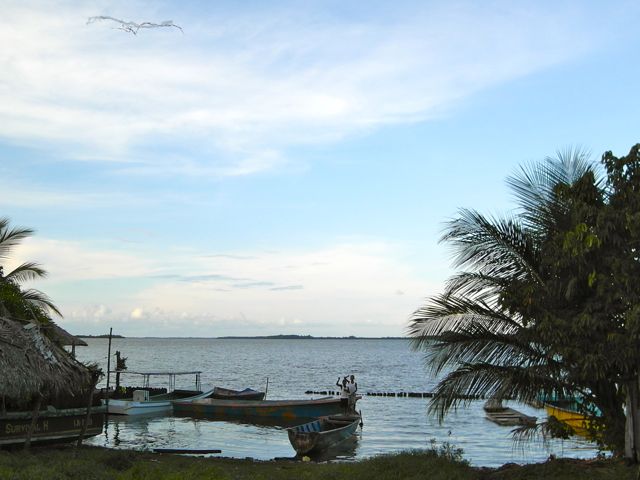
Sea is my element. If I haven’t fully understood it before, now I know it. Having stayed inland for more than three weeks I remember the sudden burst of excitement I got when I first filled my lungs with the salty smell of the sea on the way towards Bluefields on the Atlantic coast of Nicaragua. And when I closed my eyes on the boat-ride that finally took me to Bluefields the sound of the engine and waving motion of the boat immediately sent me to my childhood boat-rides to our summer cottage. Next evening eating in a restaurant built literally above the sea on poles I was looking out in the darkness when I noticed two lights – the left one green and the right one red – somewhere in the darkness. A warm sense of familiarity, emphasis on the famili-part, filled me as I knew that it was a boat approaching the harbor.

Childhood is when the basic elements of our identity are put into the place; who are we and where we belong to. And the sea was strongly present in my childhood. If someone would ask me what is my favorite place on earth I would immediately know the answer: a certain tiny island in the Finnish Gulf of the Baltic Sea. That’s where my family’s summer cottage is and where all my childhood summers were spent. Except of course for my dad’s month long summer vacation which was spent on a sailing boat. Calculating these summer months on a sailing boat together with the nine months I spent in the Finnish navy ships whilst serving the obligatory military service I could say that before the age of twenty I had spent around two years of my life sleeping on boats surrounded by the salty water.
Now I am 9.844 kilometers and one ocean away from there, in a different culture and without having met a single person from my home country in over a month. Traveling alone for such a long time one can’t avoid the moments of homesickness. Although one meets a lot of people, sometimes the loneliness grows on you and you look sadly into the distance thinking about and longing to the people and places dear to you. But when I got to the sea, half of all this was suddenly gone. That’s because I grew up with the sea. It is as much a part of my story as are many people who are close to me. Sea is part of my identity, it is part of my answer to the question ’where I belong to’. It is like a good friend – almost a member of the family. So when I am with the sea, I am no longer alone.
That’s also why sea is able to inject meaningfulness to whatever place or activity that is connected to it. Watching a sunset with a dear friend is a different experience than watching it with some random acquaintance. Although one does not speak too much, just knowing that the other is there makes the experience more meaningful. It is people we love who make our lives meaningful. That’s why experiences and activities connected to people one care about feel meaningful. And that’s why the meaning of life is to make oneself meaningful for other people. For me, the same applies to the sea. As it is like a dear friend to me, anything connected with the sea is more meaningful for me. Sense of belonging is a basic human need and I belong with the sea.
Meaningful lives: Pablo Neruda – enriching our capability to appreciate the beauty in life
What can we learn about good living from Pablo Neruda, the greatest Latin American poet? Reading his autobiography I argue that at least for me the most important lesson is about learning to embrace the richness and beauty of life. From the way he depicts his life-story one can’t fail to see that here is a person who finds tremendous beauty in whatever he happens to encounter. Be it some person he meets or a snail shell he finds on a beach, Neruda is able to have his eyes open wide enough to capture the beauty that is inherent in it. When Neruda let his passion run free ”everything is seen in its best light, everything has value, everything deserves to be the subject of a poem”, as Strand so aptly puts it in the New Yorker. To let the poet speak for himself, here is Neruda getting ecstatic about a stamp album:
Album of perfect stamps!
Butterflies,
ships,
sea shapes, corollas,
leaning towers,
dark eyes, moist and
round as grapes,
album
smooth
as
a
slippery
fish,
with thousands
of glistening
scales,
each page
a
racing
charger
in search of
distant pleasures, forgotten
flowers!
[– –]
Insatiable
spiral,
comet’s tail
of all earth’s
highways,
dictionary
of the wind,
starstruck album
bulging
with noble
fruits and territories,
treasure keeper
sailing
on its treasure,
garnet
pomegranate,
nomadic
stamp album!

Neruda’s autobiography starts with an exalted description of the Chilean forest. He describes its small details and smells, how ”the wild scent of the laurel, the dark scent of the boldo herb, enter my nostrils and flood my whole being.” In describing his encounters with nature words such as ”euphoric”, ”fascination” and ”miracle” are lined one after the other. He exclaims that if one wants to understand himself and his poetry one must understand where he came from; how he and the land were united: ”I have come out of that landscape, that mud, that silence, to roam, to go singing through the world.”
Neruda extended the same enthusiasm that nature received also to the people he met. The book is filled with small odes to the greatness of certain poets, artists and politicians that Neruda had the honor of crossing paths with. As only one example, in describing his late friend and colleague Paul Eluard (in a section entitled ’Eluard the Magnificent’) he closes with the following words: ”Tower of France, brother! I lean over your closed eyes, they will go on giving me the light and the greatness, the simplicity and the honesty, the goodness and naturalness you sowed on earth.” I stopped counting how many times Neruda exclaimed how – sometimes after a brief meeting – he and someone he met became dear friends for lifetime.
All in all, his autobiography itself is not a chronological recounting of the major points of his life but rather a collection of small stories and snapshots from here and there along the path he walked. Small moments of beauty, encounters filled with wonder, tiny bits that make human life so beautiful. I guess that this was the only way a person like Neruda could write his memoirs.
Reading Neruda I feel myself to be an engineer cursed with the gift of ’concentrating on the essentials’; only taking into account the facts that matter and ignoring everything else. This might be an effective strategy when one wants to build a bridge or an airplane. But living one’s life in a way where all the unnecessary stuff is extracted out will miss out so much beauty in the world. Concentrating on the important facts might lead one effectively from one place to another. But life itself is not so much about getting from A to B than it is about enjoying the trip itself. And in here, embracement rather than ignorance of detail is the recipe.
What is thus the most standing legacy of Neruda’s life is the way he reminds all of us how beautiful even the small details of life can be – if we just watch them with eyes wide open. As Mark Strand writes: ”There is something about Neruda—about the way he glorifies experience, about the spontaneity and directness of his passion—that sets him apart from other poets.” The best way to make one’s life experience more aesthetic is to understand that richness of observation is as much the feature of the eye as it is a feature of the world. When we learn to look at the world in the right way, we can find beauty even in a plastic bag.

Neruda found his gift of appreciating the beauty of life early on: ”Along endless beaches or thicketed hills, a communion was started between my spirit – that is, my poetry – and the loneliest land in the world. This was many years ago, but that communion, that revelation, that pact with the wilderness, is still a part of my life.” We should make the same pact with the world promising to remain open for the beauty of it all to flow in. We should enrich our lives through embracing the inherent beauty of the world.
I’ll let the master himself close this post, describing how he felt when he wrote his very first poem:
And I, tiny being,
drunk with the great starry
void,
likeness, image of
mystery,
felt myself a pure part
of the abyss.
I wheeled with the stars.
My heart broke loose with the wind.
Dirty backyards and a refined taste in wines: Aesthetics of good life
Examining the backyards of some Nicaraguan countryside homes led me to think about the role that aesthetics plays in good life. These backyards – quite frankly – were far from aesthetic. I do not know how representative they are of the country as a whole but at least in these ones various forms of garbage – buckets, pieces of metal and plastic – had been left to decay all over the place. A few hours of cleaning would do miracles to these gardens because the tropical plants would make a good base for a very aesthetic experience. Yet nobody had done this cleaning for years. Clearly aesthetic backyards was not a priority for the people inhabiting these houses.
Contrary to this, back home I have many friends and acquaintances for whom the aesthetic dimension forms a vitally important part of their way of living. Be it food, wines, music, architecture, clothing or whatever, they have acquired a very refined taste. In their fine-dining evenings they spend hours discussing and selecting the correct wine to their innovative new recipes.
This is fine as it is but for many it is clearly a game where the most important objective is not the aesthetic experience itself but to be ahead of the others: to develop a liking for a new band before others have heard it, to be able to have an opinion about the distinguishing features of every type of wine-grape and to be able to form innovative combinations of haute couture and second-hand clothes. I would go as far as to say that there are many people among us today for whom pursuing this aesthetic dimension forms the main motivational field of most of their daily activities.

As I have a certain repulsion against such games I consciously try to downplay my abilities in these fields. Many times I have arrived to a party with a bottle of the cheapest wine that money can buy which I have drank straight from the bottle whilst others are parading their wine-choices for today and tasting and discussing enthusiastically their latest findings. Strangely, nobody ever wants to taste my choice. I usually enjoy the bohemian atmosphere of places where things are a bit so-so and aesthetics is not so glaring. This all leads me to wonder why is aesthetics so important element in the life of some people?
According to the influential theory of Pierre Bourdieu, taste is about distinction. By having a certain taste I am signaling that I belong to a certain group of people – and almost more importantly: that I am not part of another group. When we, for example, distinguish between working class and bourgeois classes we do not look only at income but rather at their taste as regards clothing, food and different leisure time pursuits. This is why a person from a noble family can radiate an aura of sophistication even when his or her income is almost nonexistent. As Count Alexander Graf von Schönburg-Glachau testifies: ”Whilst we never had much money, we learned to compensate for what we didn’t have with taste.” Our taste is thus in the end nothing more but an acquired way of signaling what group we do belong to.
With Bourdieu’s theory at hand we start to see how various phenomena of modern times are nothing but ways of playing the distinction game; ways of attempting to put oneself above the others through one’s sophisticated taste. For what else is the recent trend of healthy eating and jogging than a way to distinguish oneself from those who don’t eat as healthy and don’t do running? And what else are the various lifestyle magazines than instruments that help the reader to stay one step ahead in this game of distinctions?
In the France of Bourdieu’s times things might have been relatively simple as regards class: There were the working class, the bourgeois and the nobility with their distinctive manners, hobbies and ways of dressing, speaking and thinking. In modern west the field is more fragmented; instead of clear class distinctions it is more about different aesthetic conclaves with distinguish themselves from others as regards their taste in music, clothing and often also more general life-values. There are the hipsters, there are the hippies, goths, yuppies, hiphoppers and what-not. They all might have started to listen to their kind of music and dress in their kind of way because they simply felt that that’s what they liked. But unbeknownst to them they simultaneously made a selection about what game of distinctions and sophistications they started to play. Their choices made them part of a certain group.

So, if one scratches the surface of any aesthetic sophistication, one finds a person who is eagerly attempting to show belongingness to a certain group and who is attempting to put oneself ahead of the others in terms of the greater amount of refinement that one has been able to acquire in one’s special field.
This brings us back to the backyards of the Nicaraguan village where I made the observations about the non-refinement of their backyards. Even they might be seen as signals in the game of distinctions. The village was formed in the 80s when the lands of a former land-lord were given to the people in a great land-reform. It can be assumed that these people have a strong willingness to distinguish themselves against the higher classes and display their reciprocal solidarity. So by not having too fancy houses and backyards the people are signaling that they belong together, that they are equal. A too refined backyard would signal to the other members of the village that this person is attempting to stand above the others, that the person thinks he or she is something better than the others. The game of distinctions can be played in many ways…
Examining the backyards of some Nicaraguan countryside homes led me to think about the role that aesthetics plays in good life. These backyards – quite frankly – were far from aesthetic. I do not know how representative they are of the country as a whole but at least in these ones various forms of garbage – buckets, pieces of metal and plastic – had been left to decay all over the place. A few hours of cleaning would do miracles to these gardens because the tropical plants would make a good base for a very aesthetic experience. Yet nobody had done this cleaning for years. Clearly aesthetic backyards was not a priority for the people inhabiting these houses.
Contrary to this, back home I have many friends and acquaintances for whom the aesthetic dimension forms a vitally important part of their way of living. Be it food, wines, music, architecture, clothing or whatever, they have acquired a very refined taste. In their fine-dining evenings they spend hours discussing and selecting the correct wine to their innovative new recipes.
This is fine as it is but for many it is clearly a game where the most important objective is not the aesthetic experience itself but to be ahead of the others: to develop a liking for a new band before others have heard it, to be able to have an opinion about the distinguishing features of every type of wine-grape and to be able to form innovative combinations of haute couture and second-hand clothes. I would go as far as to say that there are many people among us today for whom pursuing this aesthetic dimension forms the main motivational field of most of their daily activities.
As I have a certain repulsion against such games I consciously try to downplay my abilities in these fields. Many times I have arrived to a party with a bottle of the cheapest wine that money can buy which I have drank straight from the bottle whilst others are parading their wine-choices for today and tasting and discussing enthusiastically their latest findings. Strangely, nobody ever wants to taste my choice. I usually enjoy the bohemian atmosphere of places where things are a bit so-so and aesthetics is not so glaring. This all leads me to wonder why is aesthetics so important element in the life of some people?
According to the influential theory of Pierre Bourdieu, taste is about distinction. By having a certain taste I am signaling that I belong to a certain group of people – and almost more importantly: that I am not part of another group. When we, for example, distinguish between working class and bourgeois classes we do not look only at income but rather at their taste as regards clothing, food and different leisure time pursuits. This is why a person from a noble family can radiate an aura of sophistication even when his or her income is almost nonexistent. As Count Alexander Graf von Schönburg-Glachau testifies: ”Whilst we never had much money, we learned to compensate for what we didn’t have with taste.” Our taste is thus in the end nothing more but an acquired way of signaling what group we do belong to.
With Bourdieu’s theory at hand we start to see how various phenomena of modern times are nothing but ways of playing the distinction game; ways of attempting to put oneself above the others through one’s sophisticated taste. For what else is the recent trend of healthy eating and jogging than a way to distinguish oneself from those who don’t eat as healthy and don’t do running? And what else are the various lifestyle magazines than instruments that help the reader to stay one step ahead in this game of distinctions?
In the France of Bourdieu’s times things might have been relatively simple as regards class: There were the working class, the bourgeois and the nobility with their distinctive manners, hobbies and ways of dressing, speaking and thinking. In modern west the field is more fragmented; instead of clear class distinctions it is more about different aesthetic conclaves with distinguish themselves from others as regards their taste in music, clothing and often also more general life-values. There are the hipsters, there are the hippies, goths, yuppies, hiphoppers and what-not. They all might have started to listen to their kind of music and dress in their kind of way because they simply felt that that’s what they liked. But unbeknownst to them they simultaneously made a selection about what game of distinctions and sophistications they started to play. Their choices made them part of a certain group.
So, if one scratches the surface of any aesthetic sophistication, one finds a person who is eagerly attempting to show belongingness to a certain group and who is attempting to put oneself ahead of the others in terms of the greater amount of refinement that one has been able to acquire in one’s special field.
This brings us back to the backyards of the Nicaraguan village where I made the observations about the non-refinement of their backyards. Even they might be seen as signals in the game of distinctions. The village was formed in the 80s when the lands of a former land-lord were given to the people in a great land-reform. It can be assumed that these people have a strong willingness to distinguish themselves against the higher classes and display their reciprocal solidarity. So by not having too fancy houses and backyards the people are signaling that they belong together, that they are equal. A too refined backyard would signal to the other members of the village that this person is attempting to stand above the others, that the person thinks he or she is something better than the others. The game of distinctions can be played in many ways…
Best thing about traveling: Spontaneity and meeting new people
To balance the melancholy of the last post, here is an opposite story. Few days after the blackouts in the beach bar, I traveled onwards to León attracted by its reputation as the capital of intellectual and cultural life of Nicaragua. Whilst there, I went to eat alone in a local bar serving food even in the late hours Having finished my meal and reading a book while waiting for the check, a Norwegian guy from a big group approached me and invited me to join them to a night club they were heading to. Having no responsibilities or schedules, I naturally welcomed the idea. Two minutes later I was packed in a van with nineteen mostly Norwegian and hilariously drunk people.
We hit the night club where I happened to sit next to a local guy. We introduced ourselves to each other and I offered to buy him a beer (it is easy to be generous when a beer costs around 1$). He didn’t speak much English but I was surprised to be able to express quite many things with my hands and the lessons learned from my 5 days long intensive introductory course to Spanish (thanks Nica Spanish Language School!). He told me about a concert the next evening and invited me to join him and his friends for a pre-party at his home.
Next evening I showed the taxi-driver the address he had given me and we drove through the streets of León towards the destination. Here the streets have no names – really – so the address was quite literally ”red house 1 block south from the basketball field”. When the paved road ended and we drove in a muddy street surrounded by run-down houses in the evening darkness not lit by streetlights I began to wonder where was I really heading. Soon I was knocking on a door of a house that looked the most red of the one’s on the street hoping that I was in the right spot. Marti, my friend, opened and invited me in.

His friends spoke more English and we shared a few beers as well as listened to some local music that they introduced to me before heading for the concert. One guy’s name was Vladimir and when I asked about it he told that his mother had been in a leftist guerrilla army while she was pregnant and wanted to name her son after Vladimir Lenin. I thought what a hero I could have been on the schoolyard when children are boasting about their parents occupations if I could have said: ’My mom is a guerrilla soldier’. I found the dramatic history of Nicaragua become concrete when I realized that all the people I was meeting here had either themselves played a part in the fight against dictatorship or at least someone close to them had been involved.
So through traveling alone one opens up oneself to the potential of meeting new people. After some time of solitude one is usually quite ready to embrace all the opportunities for friendship. And with no prefixed schedule and no-one to answer to, one can freely cling to even the slightest straw of kindness and see how long it will take oneself. Many times in my travels I have for example met with a fellow solo traveler in a hostel, exchanged just a few words about our travels and plans with him or her before deciding to join forces for few days and few destinations. These have been intriguing forms of friendships: spending almost all one’s waking hours together with someone, sharing one’s lifestories to each other – and then parting and never hearing from each other again (although it might be that Facebook can actually change that last bit).
Also the openness and kindness of the locals have left me at awe all around the world. Be it an extravagant meal in a restaurant in Japan offered by a guy we just had met on the beach or community meal I was invited to participate in after visiting a local church in Rarotonga, people in every country seem to go out of their way to make sure that the visitor will remember the place and the people with warmness. I think that applies to every country I’ve visited – the only requirement is that one is somewhere where there are a bit less tourists and thus the locals have not grown too weary of them.
In fact, every time I think of the big and small acts of kindness offered to me, the stranger, by locals I am troubled by bad conscience I think how rarely I have offered a meal, a place to sleep or some smaller favor for a tourist visiting my home town. At home one is so reserved and stuck to one’s routines that one usually misses all these opportunities. It seems that one books one’s schedule so full of events that one simply don’t have the time available for being friendly. In building friendships ’It was nice to give you directions to the cathedral, Mr. Tourist, how about a lunch next Thursday at 13.30?’ is far less effective than ’In fact I can walk you to the cathedral myself. Let’s have a beer afterwards’. At home it feels that my life is already filled with so many friendships, projects and events that there is not room to meet with new people.

The reason to travel is therefore to get rid of the roles, responsibilities, schedules and other factors anchoring oneself to a more planned existence. Traveling offers one the possibility to question one’s way of living. Does good living really require so many responsibilities and predetermined activities as I am prone to gather for me? Or would less be more in terms of the room for spontaneity it would leave open for me? I really don’t know. When I get back I will most probably fill my calendar as full as it has been the last ten years. There just seems to be so many things in life that I simply can’t say no to. To counter this, I really have to remember to keep my plans as open as possible during these holidays. Too predetermined traveling would perhaps mean a larger quantity of experiences but would rip me off the opportunity to experience those adventures that can’t really be planned for. And usually they are qualitatively the most memorable moments of every trip. To balance the melancholy of the last post, here is an opposite story. Few days after the blackouts in the beach bar, I traveled onwards to León attracted by its reputation as the capital of intellectual and cultural life of Nicaragua. Whilst there, I went to eat alone in a local bar serving food even in the late hours Having finished my meal and reading a book while waiting for the check, a Norwegian guy from a big group approached me and invited me to join them to a night club they were heading to. Having no responsibilities or schedules, I naturally welcomed the idea. Two minutes later I was packed in a van with nineteen mostly Norwegian and hilariously drunk people.
We hit the night club where I happened to sit next to a local guy. We introduced ourselves to each other and I offered to buy him a beer (it is easy to be generous when a beer costs around 1$). He didn’t speak much English but I was surprised to be able to express quite many things with my hands and the lessons learned from my 5 days long intensive introductory course to Spanish (thanks Nica Spanish Language School!). He told me about a concert the next evening and invited me to join him and his friends for a pre-party at his home.
Next evening I showed the taxi-driver the address he had given me and we drove through the streets of León towards the destination. Here the streets have no names – really – so the address was quite literally ”red house 1 block south from the basketball field”. When the paved road ended and we drove in a muddy street surrounded by run-down houses in the evening darkness not lit by streetlights I began to wonder where was I really heading. Soon I was knocking on a door of a house that looked the most red of the one’s on the street hoping that I was in the right spot. Marti, my friend, opened and invited me in.
His friends spoke more English and we shared a few beers as well as listened to some local music that they introduced to me before heading for the concert. One guy’s name was Vladimir and when I asked about it he told that his mother had been in a leftist guerrilla army while she was pregnant and wanted to name her son after Vladimir Lenin. I thought what a hero I could have been on the schoolyard when children are boasting about their parents occupations if I could have said: ’My mom is a guerrilla soldier’. I found the dramatic history of Nicaragua become concrete when I realized that all the people I was meeting here had either themselves played a part in the fight against dictatorship or at least someone close to them had been involved.
So through traveling alone one opens up oneself to the potential of meeting new people. After some time of solitude one is usually quite ready to embrace all the opportunities for friendship. And with no prefixed schedule and no-one to answer to, one can freely cling to even the slightest straw of kindness and see how long it will take oneself. Many times in my travels I have for example met with a fellow solo traveler in a hostel, exchanged just a few words about our travels and plans with him or her before deciding to join forces for few days and few destinations. These have been intriguing forms of friendships: spending almost all one’s waking hours together with someone, sharing one’s lifestories to each other – and then parting and never hearing from each other again (although it might be that Facebook can actually change that last bit).
Also the openness and kindness of the locals have left me at awe all around the world. Be it an extravagant meal in a restaurant in Japan offered by a guy we just had met on the beach or community meal I was invited to participate in after visiting a local church in Rarotonga, people in every country seem to go out of their way to make sure that the visitor will remember the place and the people with warmness. I think that applies to every country I’ve visited – the only requirement is that one is somewhere where there are a bit less tourists and thus the locals have not grown too weary of them.
In fact, every time I think of the big and small acts of kindness offered to me, the stranger, by locals I am troubled by bad conscience I think how rarely I have offered a meal, a place to sleep or some smaller favor for a tourist visiting my home town. At home one is so reserved and stuck to one’s routines that one usually misses all these opportunities. It seems that one books one’s schedule so full of events that one simply don’t have the time available for being friendly. In building friendships ’It was nice to give you directions to the cathedral, Mr. Tourist, how about a lunch next Thursday at 13.30?’ is far less effective than ’In fact I can walk you to the cathedral myself. Let’s have a beer afterwards’. At home it feels that my life is already filled with so many friendships, projects and events that there is not room to meet with new people.
The reason to travel is therefore to get rid of the roles, responsibilities, schedules and other factors anchoring oneself to a more planned existence. Traveling offers one the possibility to question one’s way of living. Does good living really require so many responsibilities and predetermined activities as I am prone to gather for me? Or would less be more in terms of the room for spontaneity it would leave open for me? I really don’t know. When I get back I will most probably fill my calendar as full as it has been the last ten years. There just seems to be so many things in life that I simply can’t say no to. To counter this, I really have to remember to keep my plans as open as possible during these holidays. Too predetermined traveling would perhaps mean a larger quantity of experiences but would rip me off the opportunity to experience those adventures that can’t really be planned for. And usually they are qualitatively the most memorable moments of every trip.
Best thing about traveling: Being alone in a bar
The problem with being in your home town is that it is hard to spend time alone in a bar. Always when I try to do it, some friend or acquaintance pops into the same bar. As being alone in a bar is considered somewhat weird – as if you would not have any friends – I always have to come up with some inventive excuses to get out of the situation. Usually I claim that I-was-supposed-to-meet-my-friend-in-this-bar-but-now-he-called-that-he-is-in-another-bar-but-I-already-bought-my-drink-so-I-thought-I-might-as-well-drink-it-before-going. Then I finish my beer as quickly as I can and head towards another bar hoping to find some solitude there.
Why then to go to a bar alone? Because this enables one to feel a certain hovering form of connectedness with the human kind. It is hard to express this feeling but it resembles the melancholic form of mellowness you get when watching the stars alone at night. You feel yourself so small and merged with this vast universe. But in a bar instead of a sky full of stars there is a room full of people. Watching them happily interact, smile, laugh, dance and have a good time with each other one feels to be so far removed from their reality in one’s loneliness. At the same time watching their unique lives unfolding in front of oneself and being able to observe them while remaining anonymous fills oneself with a warm feeling. One has a somewhat paradoxical feeling of belonging to this crowd at the same time as one is far removed from it. One is an outsider at the same time as one feels to be connected.

On a Saturday night in San Juan del Sur, the surf capital of Nicaragua, I was engaged in this favorite past-time of mine. The music played high (isn’t it sad that nowadays you can travel to whatever country in the world but you can’t escape the same hits you here at your local nightclub?), the laid-back beach-side bar was packed, and the crowd was cheerful. All of a sudden a blackout stopped the music and shut the lights leaving us in darkness. The crowd reacted by cheering loudly. Suddenly the sense of community was intensified; we no longer were a random group of individuals happening to enjoy the music in the same bar but this surpising incident united us – we were experiencing something together. Soon the lights came back, the crowd cheered again and everything continued as normal. The same event happened a few more times during the evening – after all we were in Nicaragua – and the reaction was always the same.
The intensification of the sense of community in the face of a sudden interruption of the normal course of events reminded me of anthropologist Victor Turner’s concept of communitas. Starting with some observations of a few African tribes Turner argues that in every culture the forces of structure and communitas are in a constant juxtaposition against each other. During times of structure our interaction with the others takes place within a structured, differentiated, and often hierarchical system of politico-legal-economic positions. We are bound by certain roles, norms and expectations and thus are unable to reach to the other spontaneously and with the wholeness of our being. Some form of structure is necessary for the functioning of any society but luckily it leaves room for moments of communitas in which people are stripped off of all status differences and other norms that separate them from each other and are thus able to attend to the others unique and particular being and meet the other through a living mutual relation. These moments are especially prone to happen during liminal in-between situations characterized by the dislocation of established structures. What we experienced together in the bar during the black-out was clearly a tiny moment of liminality.

The waves of the dark ocean hitting the abandoned beach in the background, the relaxed bar with its light-hearted crowd in the foreground, me alone on the bar-desk with a cold beer in my hand and the lights out – I was truly enjoying my time and truly feeling connected with the world beyond myself!The problem with being in your home town is that it is hard to spend time alone in a bar. Always when I try to do it, some friend or acquaintance pops into the same bar. As being alone in a bar is considered somewhat weird – as if you would not have any friends – I always have to come up with some inventive excuses to get out of the situation. Usually I claim that I-was-supposed-to-meet-my-friend-in-this-bar-but-now-he-called-that-he-is-in-another-bar-but-I-already-bought-my-drink-so-I-thought-I-might-as-well-drink-it-before-going. Then I finish my beer as quickly as I can and head towards another bar hoping to find some solitude there.
Why then to go to a bar alone? Because this enables one to feel a certain hovering form of connectedness with the human kind. It is hard to express this feeling but it resembles the melancholic form of mellowness you get when watching the stars alone at night. You feel yourself so small and merged with this vast universe. But in a bar instead of a sky full of stars there is a room full of people. Watching them happily interact, smile, laugh, dance and have a good time with each other one feels to be so far removed from their reality in one’s loneliness. At the same time watching their unique lives unfolding in front of oneself and being able to observe them while remaining anonymous fills oneself with a warm feeling. One has a somewhat paradoxical feeling of belonging to this crowd at the same time as one is far removed from it. One is an outsider at the same time as one feels to be connected.
On a Saturday night in San Juan del Sur, the surf capital of Nicaragua, I was engaged in this favorite past-time of mine. The music played high (isn’t it sad that nowadays you can travel to whatever country in the world but you can’t escape the same hits you here at your local nightclub?), the laid-back beach-side bar was packed, and the crowd was cheerful. All of a sudden a blackout stopped the music and shut the lights leaving us in darkness. The crowd reacted by cheering loudly. Suddenly the sense of community was intensified; we no longer were a random group of individuals happening to enjoy the music in the same bar but this surpising incident united us – we were experiencing something together. Soon the lights came back, the crowd cheered again and everything continued as normal. The same event happened a few more times during the evening – after all we were in Nicaragua – and the reaction was always the same.
The intensification of the sense of community in the face of a sudden interruption of the normal course of events reminded me of anthropologist Victor Turner’s concept of communitas. Starting with some observations of a few African tribes Turner argues that in every culture the forces of structure and communitas are in a constant juxtaposition against each other. During times of structure our interaction with the others takes place within a structured, differentiated, and often hierarchical system of politico-legal-economic positions. We are bound by certain roles, norms and expectations and thus are unable to reach to the other spontaneously and with the wholeness of our being. Some form of structure is necessary for the functioning of any society but luckily it leaves room for moments of communitas in which people are stripped off of all status differences and other norms that separate them from each other and are thus able to attend to the others unique and particular being and meet the other through a living mutual relation. These moments are especially prone to happen during liminal in-between situations characterized by the dislocation of established structures. What we experienced together in the bar during the black-out was clearly a tiny moment of liminality.
The waves of the dark ocean hitting the abandoned beach in the background, the relaxed bar with its light-hearted crowd in the foreground, me alone on the bar-desk with a cold beer in my hand and the lights out – I was truly enjoying my time and truly feeling connected with the world beyond myself!
Religion as hope – visiting a youth gathering in the poor neighborhoods of San José
At four thirty on a Saturday evening I am waiting in the Park Morazán as agreed. Soon somebody calls my name and I step into a car quite unaware of our destination. We drive away from the center of San José, into one of its slums. There among the simple houses is one with the Salvation Army logo painted on the wall. Inside I find twenty or so young people hanging and waiting for the ceremony to start. I sit down in the back-corner of the room and wait to see what is going to happen.
What should the role of religion be in one’s life? This is one question that everybody in search for a good life has to answer. Religion is found to give hope, allow people to better tolerate misery and personal disasters. Religion is able to provide a sense of meaningfulness to the otherwise senseless do-abouts of the Lady Fortuna. I once heard a therapist remark that she has yet to meet a parent who has lost his or her child who would not have become at least somewhat religious. In addition, many argue that religion provides the necessary basis for our moral lives.
On the other side, the institutionalized religion has been used to control and subjugate people. Many are the wars and campaigns against people of different origin or opinions that are justified through religion. Nowadays the church often acts as the conservative force of discrimination against women and intolerance against people who don’t fit the accepted norms, for example because of different sexual orientation. Through the absolute justification that religion gives to one’s views and acts one can grow deaf to understand the perspective of the others. This might make one unable to learn from those who hold different worldviews and unable to empathize with their point of view.
When the gathering started I soon realized that at least in this neighborhood, among these young people, religion is a force for good. One father of the children was a psychologist and spoke good English and he told me that these are very poor neighborhoods with very few positive opportunities for the children. In this context the Salvation Army provides the children with one place in which they are accepted, in which someone listens to and empathizes with their joys and sorrows; a place in which they can be without fear.

The youth enjoying a band in the Salvation Army gathering
In the first part of the ceremony the communal function of religion was strongly present. The adolescents played some games together, sang and played music together, socialized and laughed a lot. In a life where they perhaps needed to assume more grown-up roles than they would have wanted in order to survive and prosper, the walls of the Salvation Army building offered them a place where they could be children again. After that it was time for some confessions: those who wanted could stand up and tell some moments from their lives that they wanted to share with others and others listened to respectfully. As a weekly ceremony, this provides a good opportunity to sum up the past week and is clearly building the youngsters ability to empathize with others. All in all, the doors were open, people went out and came in, the atmosphere was welcoming.
The contrast between the darkening streets outside and the mellowness inside was remarkable. In fact, the harsh reality of the outside world once entered the ceremony when a man dressed in rags ran into the room chased by another man. Fortunately, his chaser respected the church and didn’t follow in but contented himself with yelling some insults – that were not translated to me – through the open door. The presence of the escapee was tolerated for a while and when the coast was clear he was politely ushered out. Few other men of the streets had also joined in to listen to the ceremony. They sat in a corner quietly and respectfully and their presence didn’t seem to bother anyone.
Although the sense of community is the part of religion I embrace we must remember that religion is not only about community. At least Christianity is also about a direct relation with the God. The final part of the ceremony concentrated on this part. The lights were dim and some emotionally loaded music was heard in the background when the group leader – a woman in her fourties – took the floor. She started out quite peacefully but the force and determination in her voice steadily increased until the climax in which she repeatedly shouted in ecstasy ”Sancto, sancto, Dios, sancto!” The children so playful a moment ago were strongly taken by this ritual; I heard how some of them cried, I saw how some of them assumed a deep praying position or hugged each other firmly. This was no longer a play, this was serious religious trance.
As a philosopher, I undersign Terence’s words: ”I am a man, I consider nothing that is human alien to me.” Yet, accustomed to the much calmer Lutheran masses, this kind of ecstatic spiritual dedication is something into which I have a hard time to leap into. I attempted to let the situation take me but found myself mostly making observations and analyzing the acts of the others. I thought how strong and primitive emotions are unleashed in these rituals. They clearly reveal something about humanity that finds usually no expression in our everyday life. At the same time I thought how these emotions could be used for many purposes both good and bad. Whatever the spiritual leader would be stating in these situations, the crowd would take it into their hearts.
So what are the take-aways of my visit in terms of good life? Firstly, religion can give hope and it can offer important sense of community for people. It is important part of the good life of many poor people for whom there exists no similar other institutions that could offer the same benefits. Secondly, there is something within us humans that responses to spiritual gatherings. Otherwise it could not be explained why different forms of spirituality could have developed in virtually all human societies from the most primitive to the most sophisticated. This is a dimension I need to investigate more in the future. Thirdly, the strong emotional reactions generated by such spiritual gatherings are not good or bad in themselves. Their goodness or badness is dependent on what they are used for. As in dealing with any strong force we thus need much responsibility in making sure that we use it only for good purposes.
At four thirty on a Saturday evening I am waiting in the Park Morazán as agreed. Soon somebody calls my name and I step into a car quite unaware of our destination. We drive away from the center of San José, into one of its slums. There among the simple houses is one with the Salvation Army logo painted on the wall. Inside I find twenty or so young people hanging and waiting for the ceremony to start. I sit down in the back-corner of the room and wait to see what is going to happen.
What should the role of religion be in one’s life? This is one question that everybody in search for a good life has to answer. Religion is found to give hope, allow people to better tolerate misery and personal disasters. Religion is able to provide a sense of meaningfulness to the otherwise senseless do-abouts of the Lady Fortuna. I once heard a therapist remark that she has yet to meet a parent who has lost his or her child who would not have become at least somewhat religious. In addition, many argue that religion provides the necessary basis for our moral lives.
On the other side, the institutionalized religion has been used to control and subjugate people. Many are the wars and campaigns against people of different origin or opinions that are justified through religion. Nowadays the church often acts as the conservative force of discrimination against women and intolerance against people who don’t fit the accepted norms, for example because of different sexual orientation. Through the absolute justification that religion gives to one’s views and acts one can grow deaf to understand the perspective of the others. This might make one unable to learn from those who hold different worldviews and unable to empathize with their point of view.
When the gathering started I soon realized that at least in this neighborhood, among these young people, religion is a force for good. One father of the children was a psychologist and spoke good English and he told me that these are very poor neighborhoods with very few positive opportunities for the children. In this context the Salvation Army provides the children with one place in which they are accepted, in which someone listens to and empathizes with their joys and sorrows; a place in which they can be without fear.
The youth enjoying a band in the Salvation Army gathering
In the first part of the ceremony the communal function of religion was strongly present. The adolescents played some games together, sang and played music together, socialized and laughed a lot. In a life where they perhaps needed to assume more grown-up roles than they would have wanted in order to survive and prosper, the walls of the Salvation Army building offered them a place where they could be children again. After that it was time for some confessions: those who wanted could stand up and tell some moments from their lives that they wanted to share with others and others listened to respectfully. As a weekly ceremony, this provides a good opportunity to sum up the past week and is clearly building the youngsters ability to empathize with others. All in all, the doors were open, people went out and came in, the atmosphere was welcoming.
The contrast between the darkening streets outside and the mellowness inside was remarkable. In fact, the harsh reality of the outside world once entered the ceremony when a man dressed in rags ran into the room chased by another man. Fortunately, his chaser respected the church and didn’t follow in but contented himself with yelling some insults – that were not translated to me – through the open door. The presence of the escapee was tolerated for a while and when the coast was clear he was politely ushered out. Few other men of the streets had also joined in to listen to the ceremony. They sat in a corner quietly and respectfully and their presence didn’t seem to bother anyone.
Although the sense of community is the part of religion I embrace we must remember that religion is not only about community. At least Christianity is also about a direct relation with the God. The final part of the ceremony concentrated on this part. The lights were dim and some emotionally loaded music was heard in the background when the group leader – a woman in her fourties – took the floor. She started out quite peacefully but the force and determination in her voice steadily increased until the climax in which she repeatedly shouted in ecstasy ”Sancto, sancto, Dios, sancto!” The children so playful a moment ago were strongly taken by this ritual; I heard how some of them cried, I saw how some of them assumed a deep praying position or hugged each other firmly. This was no longer a play, this was serious religious trance.
As a philosopher, I undersign Terence’s words: ”I am a man, I consider nothing that is human alien to me.” Yet, accustomed to the much calmer Lutheran masses, this kind of ecstatic spiritual dedication is something into which I have a hard time to leap into. I attempted to let the situation take me but found myself mostly making observations and analyzing the acts of the others. I thought how strong and primitive emotions are unleashed in these rituals. They clearly reveal something about humanity that finds usually no expression in our everyday life. At the same time I thought how these emotions could be used for many purposes both good and bad. Whatever the spiritual leader would be stating in these situations, the crowd would take it into their hearts.
So what are the take-aways of my visit in terms of good life? Firstly, religion can give hope and it can offer important sense of community for people. It is important part of the good life of many poor people for whom there exists no similar other institutions that could offer the same benefits. Secondly, there is something within us humans that responses to spiritual gatherings. Otherwise it could not be explained why different forms of spirituality could have developed in virtually all human societies from the most primitive to the most sophisticated. This is a dimension I need to investigate more in the future. Thirdly, the strong emotional reactions generated by such spiritual gatherings are not good or bad in themselves. Their goodness or badness is dependent on what they are used for. As in dealing with any strong force we thus need much responsibility in making sure that we use it only for good purposes.
 Frank Martela