Category: Yleinen
On uusisänmaallisuuden aika
Suomi kansakuntana on uhan edessä. Uhka ei kuitenkaan väijy rajojemme ulkopuolella, vaan omassa mielenlaadussamme. Tunne yhteenkuuluvuudesta on heikentynyt yksilöä korostavassa kulttuurissamme. Vaarana on, että oman edun tavoitteluun keskittyessämme tuhoamme siinä sivussa kansakunnan. Vapauksien ja oikeuksien rinnalle tarvitsemme myös vastuuta yhteisestä hyvästä. On tullut aika lähteä puolustamaan tätä suomalaisuutta sisällämme, on uusisänmaallisuuden aika.
Isänmaallisuus aatteena on kokenut kovia. Tällä hetkellä se yhdistetään aivan liian usein nurkkakuntaisuuteen ja vihamielisyyteen kaikkea ulkoa tulevaa ja uutta kohtaan. Siitä on pyritty tekemään tekosyy hyökätä kaikkea sitä vastaan, mikä poikkeaa henkilön omasta pienestä elämän piiristä. Tämä on pelkurin isänmaallisuutta.
Haluan olla isänmaallinen, koska rakastan tätä maata ja näen suomalaisuudessa paljon arvokasta, jonka puolesta haluan elää ja kuolla. Mutta en halua olla isänmaallinen ketään vastaan.
Uusisänmaallisuudessa lähtökohtana on usko siihen, että siinä Suomessa, jossa elämme, on jotakin puolustamisen arvoista. Ytimessä on halu rakentaa sellaista maata, jossa kaikki voivat hyvin, riippumatta ihmisten hengenlahjoista, sukupuolesta, ihonväristä, koulutustasosta, tuloluokasta, poliittisesta aatteesta tai iästä. Se, mikä Suomessa on puolustamisen arvoista, ei siis ole mikään abstrakti aate tai illuusio yhdestä kansakunnasta. Se on jotakin konkreettista. Puolustamisen ansaitsee vain kansakunta, joka välittää kaikkien hyvinvoinnista: antaa mahdollisuuden erilaisten onnellisuuksien tavoitteluun ja tukee vähempiosaisia.

Suomalaiseksi ei synnytä. Mielestäni suomalainen on kuka tahansa, joka on valmis tekemään työtä yhteisen Suomen eteen. Muut ihmiset – vaikka heidän sukujuurensa olisivat kuinka syvällä tahansa suomalaisessa mullassa – vain asuvat maassa nimeltä Suomi. Suomalaisuus ei siis ole Suomessa asumista tai suomen puhumista äidinkielenä. Suomalaisuus edellyttää, että Suomi on sydämen asia. Ollaksesi suomalainen täytyy sinun välittää suomalaisten hyvinvoinnista, kokea vastuuta yhteisestä kotimaastamme ja olla valmis tekemään työtä sen eteen omien kykyjesi puitteissa. Jos täytät nämä ehdot, olet sydämeltäsi suomalainen, riippumatta äidinkielestä, Suomessa viettämäsi ajan pituudesta, ihonväristä tai muista merkityksettömistä pikkuseikoista.
Uusisänmaallisuus elää etsimällä uutta ja rakentamalla parempaa. Suomen kokoinen maa ei ole koskaan menestynyt pysähtymällä ja sulkeutumalla, vaan omaksumalla ja uudistumalla. Kansakuntamme hyvinvointi sodan jälkeen rakennettiin uutta luomalla, ottamalla vaikutteita ulkomailta ja ennen kaikkea tekemällä työtä yhteisen päämäärän vuoksi. Tässä mielessä uusisänmaallisuus on isoisänmaallisuutta. Se ei tarkoita nykyisen Suomen sementointia, vaan jatkuvasti paremman maan rakentamista.
Uusisänmaallisuus puolustaa suomalaisuutta, jonka ytimessä on vastuu kanssaihmisistä ja vakaa halu rakentaa Suomea, jossa kaikki voivat hyvin.
Uusisänmaallisten Suomi ei ole vain menestyjien Suomi, pellavatukkien Suomi tai vanhojen miesten Suomi. Se on yhteinen Suomi, jonka lakeuksilla on tilaa monenlaisille ihmisille. Jos et halua olla muita vastaan, mutta haluat olla ylpeä Suomesta, älä silloin ole umpimielisen isänmaallinen. Ole iloisesti uusisänmaallinen!

Jumping on a grenade: To become a hero you have to think beyond self-interest
19th December 1941 Sergeant-Major John Robert Osborn showcased the ultimate limits of human heroism As his group became divided from the main battalion in the hills of Hong Kong and had to withdraw against an overwhelming enemy he stayed behind to single-handedly engage the enemy while others ran to safety. After joining the others they soon found themselves surrounded by the enemy. Several enemy grenades were thrown towards them but the soldiers picked them up and threw back. Suddenly, a grenade landed in a position where it was impossible to return it in time. To protect his troops, Osborn shouted a warning and threw himself on the grenade. He was killed instantly.

There are many lessons to be learned from this dramatic real-life story. One of them is about human motivation. All too often we hear people saying that people are motivated solely by their own happiness. That human beings are self-interested creatures whose every single act contributes towards their own well-being. It would be quite absurd – and dishonoring – to say that John Robert Osborn was motivated by self-interestedness when jumping on the grenade. Instead we should see that he was moved by something that he considered to be so worthwhile that he was willing to sacrifice his life for it.
Many people love to debate about whether human beings are essentially egoistic or altruistic creatures. In my opinion the whole distinction is founded on a mistake. The mistake is to think that altruistic behavior must be something which is against your personal motives. Instead we human beings can be motivated by many different things, some more related to our own well-being while others are more about the well-being of others. Osborn’s case was not an isolated incident. There are several recorded incidents of similar deeds of saving your comrades by sacrificing yourself. Less dramatic acts of self-sacrifice are a significant part of everyone’s life.
So instead of this imaginary polarization between two opposing positions the real question is this: To what extent a certain person is motivated by his own well-being and to what extent by some wider concerns? Some people lean more towards egoistic end of the continuum while others are more able to take others into account. Test here where you are located.
How egoistic or altruistic we are is largely determined by our cultural upbringing. Some cultures put more emphasis on self-interest while others learn children to value more the perspective of the others. In this regard there haven’t been many cultures during the course of human history that would have emphasized more egoism and self-regard than the current western culture. The catch is here: The way we see ourselves and others is a self-fulfilling prophecy. The more the politicians, economists, media and we all as individuals talk about human beings as rational and strictly self-interested, the more we become such cold and calculating creatures. And the more we have to suppress our natural tendency for empathy and regard for others. No wonder economy students demonstrate the least other-regarding behavior in tests.
Yet despite this cultural propaganda to behave egoistically all of us transcend the limitations of such a selfish lifestyle and demonstrate remarkable deeds of acting in the name of the well-being of those around us. When the situation calls for it there are greater capacities for other-regarding behavior in us than most of us would ever imagine. John Robert Osborn’s act is a testimony for this.
By emphasizing such acts and the general human capacity for empathy we can strengthen the other-regarding tendencies in our society and in our own lives. Therefore the most essential question as regards egoism and altruism is this: In what direction do you want to develop yourself and those around you?
 19th December 1941 Sergeant-Major John Robert Osborn showcased the ultimate limits of human heroism As his group became divided from the main battalion in the hills of Hong Kong and had to withdraw against an overwhelming enemy he stayed behind to single-handedly engage the enemy while others ran to safety. After joining the others they soon found themselves surrounded by the enemy. Several enemy grenades were thrown towards them but the soldiers picked them up and threw back. Suddenly, a grenade landed in a position where it was impossible to return it in time. To protect his troops, Osborn shouted a warning and threw himself on the grenade. He was killed instantly.
There are many lessons to be learned from this dramatic real-life story. One of them is about human motivation. All too often we hear people saying that people are motivated solely by their own happiness. That human beings are self-interested creatures whose every single act contributes towards their own well-being. It would be quite absurd – and dishonoring – to say that John Robert Osborn was motivated by self-interestedness when jumping on the grenade. Instead we should see that he was moved by something that he considered to be so worthwhile that he was willing to sacrifice his life for it.
Many people love to debate about whether human beings are essentially egoistic or altruistic creatures. In my opinion the whole distinction is founded on a mistake. The mistake is to think that altruistic behavior must be something which is against your personal motives. Instead we human beings can be motivated by many different things, some more related to our own well-being while others are more about the well-being of others. Osborn’s case was not an isolated incident. There are several recorded incidents of similar deeds of saving your comrades by sacrificing yourself. Less dramatic acts of self-sacrifice are a significant part of everyone’s life.
So instead of this imaginary polarization between two opposing positions the real question is this: To what extent a certain person is motivated by his own well-being and to what extent by some wider concerns? Some people lean more towards egoistic end of the continuum while others are more able to take others into account. Test here where you are located.
How egoistic or altruistic we are is largely determined by our cultural upbringing. Some cultures put more emphasis on self-interest while others learn children to value more the perspective of the others. In this regard there haven’t been many cultures during the course of human history that would have emphasized more egoism and self-regard than the current western culture. The catch is here: The way we see ourselves and others is a self-fulfilling prophecy. The more the politicians, economists, media and we all as individuals talk about human beings as rational and strictly self-interested, the more we become such cold and calculating creatures. And the more we have to suppress our natural tendency for empathy and regard for others. No wonder economy students demonstrate the least other-regarding behavior in tests.
Yet despite this cultural propaganda to behave egoistically all of us transcend the limitations of such a selfish lifestyle and demonstrate remarkable deeds of acting in the name of the well-being of those around us. When the situation calls for it there are greater capacities for other-regarding behavior in us than most of us would ever imagine. John Robert Osborn’s act is a testimony for this.
By emphasizing such acts and the general human capacity for empathy we can strengthen the other-regarding tendencies in our society and in our own lives. Therefore the most essential question as regards egoism and altruism is this: In what direction do you want to develop yourself and those around you?
What is the most fundamental question in life? Hint: It is not about meaning of life or about what exists fundamentally
Have you ever wondered what is the most fundamental question for you or for any human being? There are a few candidates but in the end only one stands a closer scrutiny. The nominees that come most readily in mind are the classic questions about the origin of the world, about what exists fundamentally and about the meaning of life. Mesmerizing as they are, they nevertheless aren’t the most fundamental for us.
The two first-mentioned questions could be understood as questions about the nature of the universe. Where did it come from and what is it like? Other way to put them would be to ask in what kind of world do we live in? The reason they are bad candidates as the fundamental question for us human beings is that they haven’t given adequate attention to the one asking these questions, the human being itself. If we would be eternal, disengaged and god-like creatures then that kind of noble question might be worthy of our attention. But instead we have a limited time here on earth, we care about our faith and therefore we have to choose carefully how we spend that restricted time. Devoting oneself to answering these questions means that one has made a choice in which one has given priority to this activity instead of – for example – trying to find a cure for cancer or be a good father to one’s children.
We are thrown into a world in which we need to act. As sociologist Hans Joas has put it: ”Action is the way in which human beings exist in the world.” Every moment we make a choice about what we do. Whether we want it or not, we have every second the possibility to act in a multitude of ways. Therefore the most fundamental question for any human being is about what to do. What to do right now and more generally within one’s life. All the other ’fundamental’ questions are only derivatives of this more general question. For example, finding the meaning of life, true nature of happiness, reason for the existence of the universe, whether god exists, what is morally right and wrong and so forth would give us good reasons to act in certain rather than other ways. But all of them can only answer subquestions such as what to do, given religion, or what to do, given our interest in our own happiness. What we need to answer, however, is what to do, given all.
Other way to phrase the same question is to ask ’How to live a good life?’ This is so for the simple reason that we have an interest in living in better rather than worse ways. Already Socrates recognized this to be the most fundamental of all questions. For the great philosophers of ancient Greece, the question about good living formed the most fundamental question of all philosophy. The aim of philosophy was not theoretical but about aiding people in their quest to live a good life.
Curious fact about the question of good life is that every single human being answers it but only a small amount of people ask it seriously. This is because we answer it through the way we actually live. Your life is at every moment your best answer to the question of good life. You can’t escape your life and therefore you can’t escape answering this question through your way of living. The problem is that if you haven’t answered the question yourself then somebody has answered it for you. You are either guided by values and needs chosen by you or then you are guided by values, desires, wishes and so forth that the surrounding culture and media has given you.
The most important step towards a good life is to start taking responsibility for it. This means that you start to seriously consider whether the model of good life that you are living today is really what you would have wanted to choose. It means that you start to seriously think what is the best way to live given your unique personality and situation. Carving your own values and path of good living doesn’t happen in a day. It requires long-term engagement in serious reflection and dialogue with other people. But then again, the reward is the best there can be: A good life designed just for you!
Why fearless living is an attitude and what does it have to do with taxis that lack safety belts?
The American couple Eve and John had just settled into the unstable northern Uganda and were invited to a dinner in their friends house. Suddenly, a huge blast penetrated the night and made everybody jump up and drop their forks. Eve got scared but everyone else seemed to be very nonchalant about the event. Their local friend Adam smiled as he always did and said that it was ”probably just a small bomb” and that ”these things happen all the time where I am from.” When Eve didn’t calm down he hurried to add that it probably was not a bomb at all but maybe just a hand grenade. He told that ”there is no point in worrying. Things happen here. That is what? That is life here. Just get on with it.”
Sense of security is a funny notion. It is one of our most basic needs; we need to feel secure in order to feel good. But often it doesn’t seem to have much to do with the actual risks present in one’s life. What we humans are after is a sense of security, not security itself. And this can be found in many different ways. Some use seat belts when driving a car. That’s common back home. Some have a few huge stickers in the car stating that Jesus is the savior and that their fate (and concurrently their driving) is in his hands. This is common here in Central America. In this context using the seat belt would be as if one stated that one doesn’t have faith in God. Both strategies seem to lead to relative comfort for the driver and passengers alike.
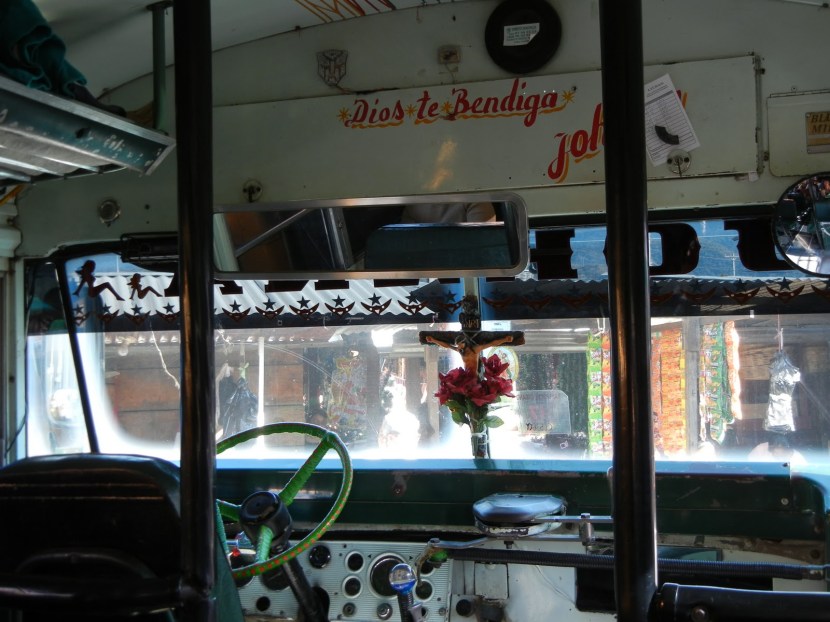
It actually seems that the human afraidness is quite constant. Often persons seem to have a certain amount of fear inside of them. The circumstances then dictate where this fear is directed. If there are serious risks in one’s life one worries about them. If there are only minor risks in one’s life one puts the same amount of worry into them. Thus we find absurd examples of protected people loosing their sleep because of some minor spot on their skin while some remote friend of them keeps calm in the middle of a life-threatening civil war. As Proust – perhaps reflecting his own experiences – has said: ”One may be afraid of not sleeping and not in the least afraid of a serious duel.”
This explains why it seems that in two different countries where the risks – as measured for example by life-expectancy – are radically different one nevertheless finds people that seem to have equal comfort in living. It is said that in countries with high volcanic activity people are unusually calm. They have accepted that everything they have – their houses, their family, their lives – could be taken away by a random twist of earth. With so many actual risks around them the usage of car safety belt feels like a minor matter and accordingly most car backseats in Central America seem to simply lack even the option of putting the belt on. And you might have guessed that the local driving style would in most cases be classified as high risk or very high risk by any western standards and the statistics show that this actually is the case.
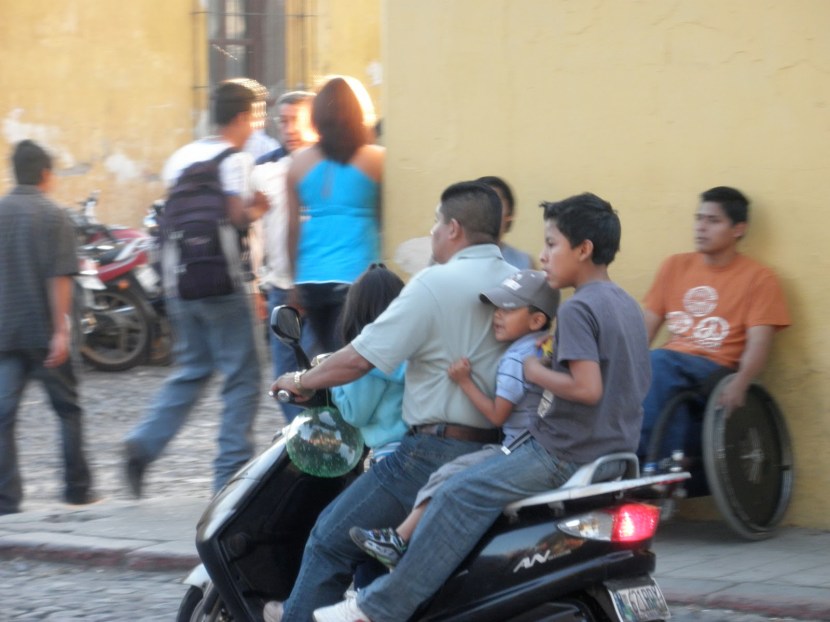
On the other hand, in the protected lifestyle of Western middle class one views car seat belts as a matter of life and death; people condemn deeply and morally those who drive without a seatbelt. Because of the technical development we wealthy westerners have an increasingly strong feeling that life is in our hands. The natural catastrophes, wars, illnesses, infant mortality and so forth that made the life of our ancestors very unpredictable are now tamed to such extent by modern technology and health care that we can on average expect somewhere around 80 years of living.
The problem is that instead of making people worry less this decrease in actual risks makes people worry more about the remaining risks. The most complaining about the dangers and risks of living I have heard from persons that objectively shouldn’t have any worries as compared to the majority of the human population.
Instead of celebrating the freedom that this lack of risks has created we seem to curl up inwards, becoming more and more afraid of ever more minor risks. Nowhere is this more clear than in modern parenting. The psychologist William Damon has noticed how more and more of the playground equipment he played around when he was kid have been forbidden as too risky during the last decades. Dodgeball is banned and monkey bars have been stripped off. He is afraid that the attempt to generate a totally secure environment for our kids might not be good in the end because children need to explore the world and their abilities.
The point to take home is this: A life without fear is not a matter of the external conditions but a matter of attitude. Life is never risk-free. We are all going to die some day. To make the most out of the days before that we should not let fear control our lives. Increased security should lead to increased playfulness – not increased fearfulness. Life is about quality, not quantity. Increased life expectancy is of no use if it doesn’t lead to increased life celebration – even with few risks.
 The American couple Eve and John had just settled into the unstable northern Uganda and were invited to a dinner in their friends house. Suddenly, a huge blast penetrated the night and made everybody jump up and drop their forks. Eve got scared but everyone else seemed to be very nonchalant about the event. Their local friend Adam smiled as he always did and said that it was ”probably just a small bomb” and that ”these things happen all the time where I am from.” When Eve didn’t calm down he hurried to add that it probably was not a bomb at all but maybe just a hand grenade. He told that ”there is no point in worrying. Things happen here. That is what? That is life here. Just get on with it.”
Sense of security is a funny notion. It is one of our most basic needs; we need to feel secure in order to feel good. But often it doesn’t seem to have much to do with the actual risks present in one’s life. What we humans are after is a sense of security, not security itself. And this can be found in many different ways. Some use seat belts when driving a car. That’s common back home. Some have a few huge stickers in the car stating that Jesus is the savior and that their fate (and concurrently their driving) is in his hands. This is common here in Central America. In this context using the seat belt would be as if one stated that one doesn’t have faith in God. Both strategies seem to lead to relative comfort for the driver and passengers alike.
It actually seems that the human afraidness is quite constant. Often persons seem to have a certain amount of fear inside of them. The circumstances then dictate where this fear is directed. If there are serious risks in one’s life one worries about them. If there are only minor risks in one’s life one puts the same amount of worry into them. Thus we find absurd examples of protected people loosing their sleep because of some minor spot on their skin while some remote friend of them keeps calm in the middle of a life-threatening civil war. As Proust – perhaps reflecting his own experiences – has said: ”One may be afraid of not sleeping and not in the least afraid of a serious duel.”
This explains why it seems that in two different countries where the risks – as measured for example by life-expectancy – are radically different one nevertheless finds people that seem to have equal comfort in living. It is said that in countries with high volcanic activity people are unusually calm. They have accepted that everything they have – their houses, their family, their lives – could be taken away by a random twist of earth. With so many actual risks around them the usage of car safety belt feels like a minor matter and accordingly most car backseats in Central America seem to simply lack even the option of putting the belt on. And you might have guessed that the local driving style would in most cases be classified as high risk or very high risk by any western standards and the statistics show that this actually is the case.
On the other hand, in the protected lifestyle of Western middle class one views car seat belts as a matter of life and death; people condemn deeply and morally those who drive without a seatbelt. Because of the technical development we wealthy westerners have an increasingly strong feeling that life is in our hands. The natural catastrophes, wars, illnesses, infant mortality and so forth that made the life of our ancestors very unpredictable are now tamed to such extent by modern technology and health care that we can on average expect somewhere around 80 years of living.
The problem is that instead of making people worry less this decrease in actual risks makes people worry more about the remaining risks. The most complaining about the dangers and risks of living I have heard from persons that objectively shouldn’t have any worries as compared to the majority of the human population.
Instead of celebrating the freedom that this lack of risks has created we seem to curl up inwards, becoming more and more afraid of ever more minor risks. Nowhere is this more clear than in modern parenting. The psychologist William Damon has noticed how more and more of the playground equipment he played around when he was kid have been forbidden as too risky during the last decades. Dodgeball is banned and monkey bars have been stripped off. He is afraid that the attempt to generate a totally secure environment for our kids might not be good in the end because children need to explore the world and their abilities.
The point to take home is this: A life without fear is not a matter of the external conditions but a matter of attitude. Life is never risk-free. We are all going to die some day. To make the most out of the days before that we should not let fear control our lives. Increased security should lead to increased playfulness – not increased fearfulness. Life is about quality, not quantity. Increased life expectancy is of no use if it doesn’t lead to increased life celebration – even with few risks.
Are you living for yourself or just for the image of yourself?
You know the frustration when you overcome your fear, manage to do a great performance – and then your friend tells you: ”Oh sorry, the camera malfunctioned and I didn’t get any pictures!” Me too. And that means that we are the victims of our modern culture that emphasizes images instead of actual living.
I realized this when I was back in civilization after having spent a week in the rural village of Lagartillo in Northern Nicaragua. Looking at myself at the mirror and seeing my unshaven looks I realized that I had lived a whole week without once seeing an image of myself. With mirrors, cameras, facebooks, youtubes and so forth this is a rare condition nowadays.
In the modern world of images, we seem to have lost our capacity to actually live out our lives. Life has become a matter of producing impressive images of an awesome life. People go to great lengths to produce that one perfect image to put on Facebook to impress others. More important than what our lives actually are like, is how they look like.

The image: The author riding down mountain Los Pueblos Amigos, one of the steepest and most famous MTB tracks in Costa Rica.
Nowhere is this more clear than on holidays. I’ve travelled with people that live their whole journey through the lens of the camera. Whatever impressive comes their way, the most important thing is not to actually experience the thing but to have a good picture of it. They are not present in their holidays but give up their actual holiday experience for the images they can show to others somewhere in the future. If they miss to capture something impressive their frustration is strong.
Even the sports nowadays are more about posing than the actual physical movement. I’ve noticed how fourteen-year-old kids refuse to even stand on a skateboard if someone is not filming. When they perform something extraordinary they don’t celebrate the thing itself. No, they run to the cameraman to see if he got it filmed all right. The sports that gain popularity are those from which you can capture impressive images from. In traditional sports like football, basketball, tennis, jogging or icehockey one can be in a constant flow of excitement for hours in a row. But in many of the modern extreme sports most time is spent waiting or preparing while the actual performance can last for only a few seconds. The thing is that with a good camera one can capture cooler photos from those few seconds than from the long hours of running on a field chasing an unsexy leather ball. The sports that look good attract more and more followers instead of sports that feel good.
How did we end up here? The technological development and our modern society of abundance are the driving forces. Jean Baudrillard argues that during the 20th century we transferred from a society that focused on commodities into a society that focuses on the consumption of images. Modern advertisement doesn’t any more sell us products but rather images and identities that the products present. We have entered the age of hyperreality in which simulated experiences and feelings have started to take the place of actual experiences. In this complex world generated by mass communication, advertisement, computer games, internet avatars and consumption of identity through branded products we have partially lost contact with ourselves. We have entered a Disneyland kind of world where the boundaries between real life and simulated life have become blurry.
The reality behind the image
Sounds complicated? Yes, the mix-up that has generated our modern condition is very complicated. I feel personally quite helpless and confused when those strong powers are messing up our way of living. But basically the thing is that because of the messages that we are bombarded with through TV, magazines and advertisement we feel that we have to keep up with the lifestyle that they promote as good and normal. Instead of being able to concentrate on our actual lives we have started to devote as much energy to our simulated lives: Making sure that our life looks like as it should; making sure that we are able to produce enough cool images to put on Facebook and other places to convince other people that we live up to the standard.
And as that standard is generated by professional actors, photographers, script writers and directors, our actual or simulated lives will never be able to reach it. We end up on an endless chase after the dream life that is impossible to make into reality in the first place.
I myself am not innocent either. When during this trip I’ve seen something impressive my first reaction has been to look for my camera. I also remember the frustration when I lost the contact information of the guy who had an underwater camera and got pictures of sharks we saw on our scuba dive in the Blue Hole. As the popular catchphrase nowadays goes: ’Pictures, or it didn’t happen!’ So although I know its bad for me and try to fight against it I still am as captured by our culture of images as any other traveller and citizen.
How then to fight the seductive world of images that aims to alienate us from our lives? It is so pervasive feature of our culture that simple step-by-step instructions don’t seem adequate. The most important thing is to strengthen one’s personal values and one’s self-knowledge. The more we know about what we really care about the more we are able to devote our energy to those issues. The more we remind ourselves about our real sources of happiness – family, close friends, making a meaningful contribution both inside and outside of work – the more we are able to concentrate on them. And the more we concentrate on them, the more our happiness is based on sustainable values instead of chasing the elusive dream of a life that looks perfect. We need to feel more and pose less.
The change starts with a simple question you should ask yourself everytime you are starting to do something: Am I doing this for myself or for the image of myself?
30: Kun täytin vuotaakseni yli, tähdellistyäkseni
Mitä ovat ajan merkkipaalut siinä kokemuksen loputtomassa virrassa, jonka jäsennämme tarinallisesti ihmiselämäksi? Itse asettamiamme rajaviivoja, joihin takerrumme jaksottaaksemme kokemustamme, luodaksemme käänteen pisteitä, keinotekoisia katkoksen perspektiivejä kudelmaan. Mutta juuri sen vuoksi, että ne luovat pysäyksen saarekkeita elämän vuokseen, ovat ne tuon virtauksen suuntaamisen suhteen tärkeitä. Tarkastelen omasta näkökulmasta niistä läheisintä.
Olemiseni rajallisuus, minuudelleni varattu päättyvä pelitila ajassa. Tämän sisäistäminen kytkeytyy vahvasti tähän nyt ylitettävään merkkipaaluuni. Nuoruus on ikuisuuden aikaa, kaiken ehtii tehdä vielä huomenna, mikään valinta ei ole lopullinen koska aikaa on vielä aloittaa alusta. Rajapyykilläni katson nyt taakseni ja tiedostan, että tiettyjä asioita ei koskaan tullut aloitettua. Ne olisivat voineet olla osa nuoruuttani, mutta eivät tule sitä koskaan olemaan.
Tämän hyväksyminen on vihlaissut kipeästi minua useaan otteeseen lähimpien kuukausien aikana. Mutta hiljalleen alan antamaan periksi sille ajatukselle, että päätöstä kohti juoksevassa ajassa ei aivan kaikkea voi saada. Elämysteni tilikirjaa täyttäessäni olen ajoittaisista vihlaisuista huolimatta todennut saldoni olevan monessa suhteessa edulliset lähtökohtanikin huomioon ottaen ihan mukava. Ajan vääjämättömän virtaamisen täysi hyväksyminen vaatii vielä työtä, mutta matkalla olo on jo hyvä alku.
Post-materiaalisen yhteiskuntamuotomme asettama kehitystehtävä noin kolmeenkymmeneen jatkuvalle myöhäisnuoruudelle on etsintä, kokeilu ja oman itseyden toteuttamisen tavan löytäminen. Tässä voin sanoa onnistuneeni. Irtauduin ja etsin, hakeuduin mahdollisuuksien puitteissa erilaisten elämänkatsomusten pariin, hain aktiivisesti mieltä avartavia uusia näkökulmia, pyrin ottamaan vakavasti kaikki tarjotut asennoitumistavat. Ja näiden toiseuden peilien kautta sain kokea yhä uudestaan niitä oivalluksen hetkiä, joissa oman perspektiivini rajoittuneisuus tuli näkyväksi minulle. Asteittain, välillä hiipien, välillä jymähtäen päin kasvoja, kasvoi etsinnälleni toivottu tulos.

Ihmisen osa on kohdata maailmallisuus siinä määrin kuin on siihen valmis. Harsoiset, pehmeän viettelevät kudelmat haihtuivat silmieni edestä usvamaisesti, eivät missään vaiheessa terävästi naksahtaen. Hiljaa alkoi niiden takana oleva musta tyhjyys kuultaa lävitse. Katsoin kiellettyyn, mutta kokemus ei ollut koskaan säikäyttävä, vain miellyttävän melankolinen. Lähempää tulviva lämpö kannatteli minua, kelluin turvassa allani levittäytyvää tyhjyyttä tunnustellen.
Halusin löytää tuon lämmön lähteet. Halusin kasvaa kohtaamaan tuon tyhjyyden kirkkain silmin ja levollisin mielin. Halusin ymmärtää missä tiedostava elämä kelluu; mikä voi kannattaa, vaikka jalkojen alla ei voi olla mitään vakaata? Halusin tutustua niihin erilaisiin harsomisen muotoihin, joilla ihmiset ja kulttuurit ovat tuon tyhjyyden torjuneet sekä rakentaneet merkitykselliseksi kuroutuneet elämänmuodot. Ja sidoin itseni tekemään työtä sen eteen, että voin jakaa kasvuni hedelmät muiden poimittaviksi heidän omalla matkallaan kahden tyhjyyden välisessä välähdyksessä. Löysin sen mitä haluan vuotaa yli.
Eteenpäin kulkevalla elämälläni on nyt selkeä suunta. Olen löytänyt ne arvot, ne päämäärät ja ne läheisyyden muodot sekä monet niistä elävistä lähimmäisistä, joihin haluan oman minuuteni sitoa. Toki koen että velvollisuuteni itseäni kohtaan on pitää tämä suuntautuneisuuteni kenttä muovautumiselle alttiina – sulkeutuminen on hengen kuolema -, mutta kentän selkeytyminen on saavuttanut asteen jossa elämänvalintojen tekeminen sen pohjalta tuntuu vakaalta.
Mainitsiko joku kuoleman? Hyvä on, vaikka elinvoimani saa sen vielä tuntumaan horisontin takaiselta kuilulta, on se tietysti tänäänkin läsnä, rajana jota vasten olemiseni suuntautuneisuus virittyy. Ja kutsumukseni vuoksi sen läsnäolon toistuva tiedostaminen ja hyväksyminen on lahja kehitykselleni. Olen tehnyt työtä kyetäkseni kohtaamaan kuoleman ammatinvalintani vaatimalla tyyneydellä. Toki toivon, että näiden harjoitteideni koetinkiveen olisi ajallista etäisyyttä vielä useampi vuosikymmen. Niin paljon on vielä elämyksiä, joita maailma voi antaa minulle. Niin paljon on läheisiä, joiden tarinan osana haluan olla. Ja niin paljon on mielessäni asioita, jotka haluan maailmalle lahjoittaa ennen ajallisuuteni päättymistä. Jos tietäisin elinpäivieni lähestyvän päätepistettään lähiaikoina, haluaisin ennen kaikkea kirjoittaa. Haluaisin jättää jotakin sisälläni olevista siemenistä muiden viljeltäväksi ja korjattavaksi.
Ei kuitenkaan pidä kätkeä totuutta pelkkiin vakaviin lauseisiin: Ilakoiva olen ollut ja olen edelleen! Eksistentiaalisten kirjoitushaasteiden synkistävästä vaikutuksesta huolimatta. Reipas elämänilo on minua pukenut, mieleeni on voimakkaana juurtunut kyky kääntää vastoinkäyminen ympäri, löytää sen alta haaste tai ratkaisu johon huomioni keskitän. Kaiken kaikkiaan kasvuympäristöni lempeys antoi mahdollisuuden eläytyä elämään kevyen leppoisasti. Perhosen lailla olen lepatellut sen lävitse, suuntaa seuraten tai sitä hakien, mutta myös suunnattomuuksille huomattavasti tilaa antaen. Rehellisesti sanottuna, en ole pohjimmiltani kyennyt ottamaan mitään oman tai muun ihmiselämän suurta tai pientä ilmiötä täysin vakavasti, tietty pilke on värittänyt kaikkien kokemusteni kohtaamista. Ehkä juuri siksi jouduin hakemaan olemiselleni ankkurin syvälle menevistä peruskysymyksistä.
Kypsyin hitaasti, koska välttelin äärimmäisyyksiä, radikaaleja siirtymiä ja suoria yhteenottoja. Erilaisilla kypsyntäkeinoilla on puolensa, mutta tämäkin tapa tuotti tuloksen, jonka olen valmis allekirjoittamaan. Nyt lepattelullani on suunta. Ja osa minusta huokaa: jo oli aikakin. Lepattelulla on toki puoltajansa minuuteni monimutkaisessa kudelmassa, mutta syvempään suuntaan ankkuroitunut osio on ajan kulumisen kautta jatkuvasti vahvistunut. Ja nuoruuteen liittyvät hedonistiset velvoitteet ovat jo usein tuntuneet sisäisesti haaleilta ja ulkoisesti kahleilta. Koetan käyttää tämän rajaviivan niiden liiallisesta palvomisesta irtautumiseen.
Tähde on se mikä jää ylitse. Elämä on tähdellistä, kun se tuottaa jotakin itsensä ylittävää. Kun siitä riittää annettavaa toisille. Olen toteuttanut kehitystehtäväni, olen löytänyt tähdellistymiselleni kanavan. Seuraava askel on sen täyttäminen.

Meaningful lives: José Angel – a seventeen-year-old with a dream
What are you going to do when you grow up, I asked the 17 years old José Angel in the remote countryside village of Lagartillo in Northern Nicaragua. What I got for an answer was an enthusiastically delivered two-hour long lecture about the revolutionary history of Nicaragua and how radios played a central role in this process. He wanted to join this historical chain and study media communications to become a host of his own political radio show in the future. His performance left me energized and thinking how enormous impact such young people with a calling can have for the future of a country.

In his book The Path to Purpose, William Damon argues that the best thing that can happen to a young person is to find her or his calling: ”This clarity of purpose generates in them a prodigious amount of extra positive energy, which not only motivates them to pursue their goals passionately but also to acquire the skills and knowledge they need for this task. In the process, they become very good learners; and they develop a practical effectiveness unusual for people their age.”
Here I was listening to a living example of Damon’s argument. A young person whose life was not revolving around himself and his immediate gratifications. Unlike most western 17-year-olds – the past me included – whose long-term visions meant asking where is the party next Saturday this guy was carried forward with a passion to make a difference. This didn’t mean that he would turn a blind eye to the delights of the youth either – from his tales I understood that his enthusiasm was well received by many girls – but simply that his life had a purpose that reached beyond simple hedonistic pleasures.
Even the language barrier couldn’t stop him from delivering his lecture. He told how his grandparents – along with the majority of the population – had been illiterate and how his grandfather had listened to a clandestino radio station during the Somoza dictatorship. He told how these revolutionary radio stations had delivered education to the villages, told news that the dictator tried to hide, mobilized people to counter the regime and encouraged their spirits by playing revolutionary songs. He told how the revolution finally succeeded, but also about the problems that his country encountered during the following years. Nevertheless, he had great faith in the current government. With a zest he told what good things the government had brought to this village during the last few years, most important being 24 hour electricity and a secondary school.

For him it was clear that if his home country wanted to carry this torch of development into the future, the engagement of young people into the local and nation-wide politics was the key. They must be educated to understand the importance of the political process in making the world a better place. He didn’t want his fellow youngsters to turn into passive and selfish idlers for whom the high-point of life is winning the NHL tournament on PlayStation and whose horizon is narrowed to include only me, myself and I. He wanted to make a difference by helping young people in his home-country to find a cause beyond themselves.
As said his own recipe for contributing to this development was radio. He wanted to study media communications in the university and after that host a radio show of his own in which he educates people about the political matters and plays Nicaraguan songs that promote the revolution. His own grandfathers liberation from ignorance started from listening to radio. He wanted to offer the same opportunity for the generations to come.
Throughout his tale I kept coming back to wondering how dramatically different his appearance was compared to an average seventeen-year-old in my youth. We were not interested in great causes, we were interested in who could buy us the alcohol for the weekends party and if some specific girls were coming there. Future meant for us studying and building a successful career. Pleasures in the short term, success in the long term, those were our goals. In other words, our lives revolved around ourselves and the satisfaction of our personal needs. He had found something better.
Naturally, there will be many people who will tell him that his dream is not worth fighting for. They will tell him that radio is a media of the past, nowadays TV is the only media that matters. They will tell him that his ideals and his understanding of the Nicaraguan politics are naïve. When he enters the university he will surely encounter many objections against his political ideals and his ideas of fulfilling them. These objections and the acquired knowledge will surely more or less redirect his calling into new directions. So it might very well be that he never realizes his vision as it stands today.
What I am sure about, however, is that these encounters will not take away the wave of positive energy that carries him forward. And wherever such a great concentration of willpower is heading at, there will be those who want to support him and there will be significant results. His goals might change along the way but I am sure that the new ones will be as filled with meaning as the present one. He is heading towards a meaningful existence – a life that is dedicated to making the world a better place through the means that he finds most fitting for himself. What greater blessing could a young person have?

Ihminen ei ole oman onnensa seppä, vaan oman onnensa keskushyökkääjä
Joskus tiede murskaa vanhojen sananlaskujen totuuden: Jokainen on oman onnensa seppä. Sananlasku on tärkeä muistutus siitä, että menestyksemme elämässä on paljolti itsestämme ja omasta panoksestamme kiinni. Sanavalinta on kuitenkin huono ja osuvampaa olisi sanoa: ’Jokainen on oman menestyksensä seppä.’ Tässä muodossa voisin sananlaskun vielä hyväksyä. Mutta väitteenä onnellisuudesta se on harhaanjohtava ja haitallinen.
Onnellisuus on nimittäin eri asia kuin menestys. Ja tältä osin viimeaikainen onnellisuustutkimus kertoo selkeää kieltään: Onnellisuutta emme saavuta takomalla ulkoista maailmaa kuin rautaa. Niin kauan kuin etsimme onneamme jonkin suorituksen päässä häämöttävänä palkintona olemme kuin rottia, jotka juoksevat oravanpyörässä kohti edessä killuvaa juustopalaa: saalis on aina seuraavan ponnistuksen takana.
Jos todella haluamme tulla onnelliseksi on meidän tiedostettava kaksi asiaa: Ensinnäkin – kuten Siddhartha Gautaman tapaiset ajattelijat oivalsivat jo tuhansia vuosia sitten – ulkoisen maailman sijasta meidän tulee keskittyä sisäiseen maailmaamme: asenteisiimme, ajattelutapoihimme ja siihen miten suhtaudumme itseemme ja maailmaan. Tutkimukset osoittavat, että muovaamalla ulkoisen maailman sijasta tapaamme olla tässä maailmassa kykenemme kasvattamaan onnellisuuttamme pysyvästi. Tässä myönteisten ajattelutaitojen opettelun projektissa harjoittelu on keskeistä.
Toiseksi toisten ihmisten rooli onnellisuudessamme on usein ratkaiseva, vaikka yksilöä palvova länsimainen kulttuuri koettaakin tämän usein kieltää. Tutkimukset osoittavat, että ihmiset, joiden elämäntavoitteet ovat vähemmän itsekeskeisiä ovat onnellisempia. Niinpä moni kyynärpäät pystyssä omiin tavoitteisiinsa rynnivä ihminen tekee itse asiassa hallaa omalle onnellisuudelleen heikentämällä ympäriltään sitä sosiaalista yhteisöllisyyttä, jossa onnellisuutemme todellisuudessa asustaa. Suuri humanisti Martti Lindvqist pukee tämän sanoiksi mainiolla tavalla: “Ihmisen julistautuminen oman onnensa ja pelastuksensa suvereeniksi tekijäksi sitoo hänet ikuiseen suorittamiseen vieden lopulta pohjattomaan yksinäisyyteen.”
Ehdotankin jalkapallon ystävänä, että sananlasku pitäisi muuttaa muotoon: ’Jokainen on oman onnensa keskushyökkääjä.’ Yksilö on siis edelleen keskeisimmässä roolissa, mutta onnistuakseen hänen tarvitsee ensinnäkin harjoittaa taitojaan ja toiseksi löytää ympärilleen sopiva ja häntä tukeva tiimi. Tässä muodossa sananlasku antaisi realistisemman kuvan siitä, mistä meidän kannattaa onneamme etsiä.
Crossing the world to find yourself: How to use traveling as a tool for personal growth
In the Tortuga Boluuda hostel in Léon, Nicaragua, I was examining a Land Rover Defender parked outside when an English gentleman arrived on the scene. It turned out that he and his wife were on a two year long car trip around the world that had already taken them through the whole Asia and was now taking them through America from north to south. I saw the opportunity and immediately asked what such a long trip had learned them about good living. The most important lesson was clear: Traveling changes your worldview, whether you want it or not. They had experienced it themselves and everyone they had met who had done a similar trip told the same. Are you prepared to change? Would you like to use traveling as a tool for your personal growth?

The gentleman explained that by living in your home country you learn to look at the world through the lenses provided by that culture. The people around you condition you to look at the world in a certain way. You acquire the feeling that certain forms of behavior are normal and acceptable while certain others are not. This is what changes when you travel long enough. You become aware of other ways to look and evaluate the world around you. As a mundane example the gentleman told how in Kazakhstan the public toilets lacked doors:
So there he was, sitting in the toilet with his pants down when a local farmer with a donkey passed by. The Englishman looked at the farmer, the farmer looked back at him, and he felt that this was totally normal. Back in Britain the same scene would have felt extremely embarrassing.
To use traveling as a tool for your internal growth three conditions have to be met:
Firstly, any deeper change of worldview requires time. A week or two is not enough because you carry your cultural package wherever you go. Only through time you learn to gradually look beyond it in interpreting the behavior of others. This is why everyone should at least once in their life live amongst a culture that is not their own. One doesn’t have to take such a ambitious trip that spans all continents to achieve that, it is enough to stay put in some other country preferably a bit further away from home. More important than the location is time, the longer you stay the deeper insight you achieve about the new culture – and through that of your own culture.
Secondly, one needs some courage, the gentleman told. When you step outside your worldview and examine it critically you simultaneously step outside of your comfort zone. It can be quite a painful experience to learn that something you have believed in and based your life decisions on isn’t so certain after all. Abandoning your deeply-held beliefs is hard. To achieve that you have to have enough strength of character. Otherwise you easily fall into a defensive state where you blind yourself from seeing what could be detrimental in your current worldview and furiously defend it against all differing ways of living.
Thirdly, you need to expose yourself to the real life of the country you are in. It is perfectly possible to travel around the world without leaving the comforts of western living behind. One can take sunbaths in a gated resort on the coast of Tansania feeling lucky that the realities of the poor life of the local people is out of sight. But this kind of disneyland-traveling doesn’t learn you anything. What you need to do is to step outside the tourist traps and encounter the local way of living. Visit their homes, walk around in their farms, eat with them. Only in meetings with ordinary people does genuine cultural exchange occur.
The gentleman told also another perhaps even more revealing example of how important the skill to interpret situations from the perspective of the other is. This time the scene took place in Honduras:
The couple had camped in the jungle near a village where indigenous Mizkito people lived in very rural conditions. Driven by curiosity the local kids had come to look at them and befriended them. The couple was eating and the kids asked for food so they gave a little food for the kids. Next day the kids who again had come to play around with them asked for some cooking oil. They even suggested that they can wash the car and get some oil as a reward. The couple running low on the cooking oil told that they can’t give it to them. Later they noticed how someone had stolen the oil bottle. When one of the kids returned the man told him how disappointed he was. Embarrassed the kid returned the empty bottle and said that the oil went to his mom.
From the western point of view the situation is clear: The kids stole the oil and stealing is morally wrong. End of story. From the local, more collective perspective where ownership is not such a holy cow the situation is more complicated. In these kinds of cultures it is regarded as common place that those who have share with those who haven’t. Even though the couple from their own perspective was running low on food and had a tight budget ($20 per day which is already quite little), compared to the kids they were extremely wealthy. From the perspective of the village people the car alone confirmed that. They might have felt it unjustifiable that the couple was not willing to share even a little bit of oil with them. So they took the justice in their own hands.
Hearing this story was a learning point for me. If I would have been in their situation I most probably wouldn’t have been able to look at the crime from this perspective. And most probably if this had happened during one of the first days of their trip the gentleman wouldn’t have had the widened perspective either to look at the matter from this angle. But after more than a full year of travel and contact with different indigenous people he had already learned a thing or two about their worldviews. The long nights spent at small villages in Ukraine, Mongolia, Guatemala and other countries along the way had paid off.

But be warned, the internal growth comes with a price. It might be surprising to learn that the hardest part of a long-term trip is going back home. It is quite understandable, however, given the changes you have gone through. You are a different person, most probably enlightened in many ways compared to your old self. And there you are, back home where nothing has changed: Your friends are the same, your work and colleagues are the same, the society and everything is the same. How are you able to cope? There seems to be a place carved for you by your old self but somewhat you feel that you don’t fit into it anymore.
Two issues in particular worried the gentleman. Firstly he felt that in some ways his views about the upsides and downsides of modern western societies had changed. And he was afraid that his old friends and colleagues would not understand his changed viewpoints. Secondly, he had been a quite successful leadership consultant before their trip. But given all he had experienced and all the ways in which his attitudes and values had changed during the trip he wasn’t sure that he simply could jump back in that career.
They still had a long way to go – through the South America, cross the Atlantic, and through the Africa – but sooner or later he would have to take issues with what way of living he could commit himself to in the future. What kind of place could he find in the society that had been his home throughout his life but that he had to learned to look from a new angle because of their trip?
By exposing yourself to different people with different world-views you run the risk of changing yourself, your values and your way of living – sometimes even radically. That is called evolution of thinking, it is personal growth. But are you ready for that?In the Tortuga Boluuda hostel in Léon, Nicaragua, I was examining a Land Rover Defender parked outside when an English gentleman arrived on the scene. It turned out that he and his wife were on a two year long car trip around the world that had already taken them through the whole Asia and was now taking them through America from north to south. I saw the opportunity and immediately asked what such a long trip had learned them about good living. The most important lesson was clear: Traveling changes your worldview, whether you want it or not. They had experienced it themselves and everyone they had met who had done a similar trip told the same. Are you prepared to change? Would you like to use traveling as a tool for your personal growth?
The gentleman explained that by living in your home country you learn to look at the world through the lenses provided by that culture. The people around you condition you to look at the world in a certain way. You acquire the feeling that certain forms of behavior are normal and acceptable while certain others are not. This is what changes when you travel long enough. You become aware of other ways to look and evaluate the world around you. As a mundane example the gentleman told how in Kazakhstan the public toilets lacked doors:
So there he was, sitting in the toilet with his pants down when a local farmer with a donkey passed by. The Englishman looked at the farmer, the farmer looked back at him, and he felt that this was totally normal. Back in Britain the same scene would have felt extremely embarrassing.
To use traveling as a tool for your internal growth three conditions have to be met:
Firstly, any deeper change of worldview requires time. A week or two is not enough because you carry your cultural package wherever you go. Only through time you learn to gradually look beyond it in interpreting the behavior of others. This is why everyone should at least once in their life live amongst a culture that is not their own. One doesn’t have to take such a ambitious trip that spans all continents to achieve that, it is enough to stay put in some other country preferably a bit further away from home. More important than the location is time, the longer you stay the deeper insight you achieve about the new culture – and through that of your own culture.
Secondly, one needs some courage, the gentleman told. When you step outside your worldview and examine it critically you simultaneously step outside of your comfort zone. It can be quite a painful experience to learn that something you have believed in and based your life decisions on isn’t so certain after all. Abandoning your deeply-held beliefs is hard. To achieve that you have to have enough strength of character. Otherwise you easily fall into a defensive state where you blind yourself from seeing what could be detrimental in your current worldview and furiously defend it against all differing ways of living.
Thirdly, you need to expose yourself to the real life of the country you are in. It is perfectly possible to travel around the world without leaving the comforts of western living behind. One can take sunbaths in a gated resort on the coast of Tansania feeling lucky that the realities of the poor life of the local people is out of sight. But this kind of disneyland-traveling doesn’t learn you anything. What you need to do is to step outside the tourist traps and encounter the local way of living. Visit their homes, walk around in their farms, eat with them. Only in meetings with ordinary people does genuine cultural exchange occur.
The gentleman told also another perhaps even more revealing example of how important the skill to interpret situations from the perspective of the other is. This time the scene took place in Honduras:
The couple had camped in the jungle near a village where indigenous Mizkito people lived in very rural conditions. Driven by curiosity the local kids had come to look at them and befriended them. The couple was eating and the kids asked for food so they gave a little food for the kids. Next day the kids who again had come to play around with them asked for some cooking oil. They even suggested that they can wash the car and get some oil as a reward. The couple running low on the cooking oil told that they can’t give it to them. Later they noticed how someone had stolen the oil bottle. When one of the kids returned the man told him how disappointed he was. Embarrassed the kid returned the empty bottle and said that the oil went to his mom.
From the western point of view the situation is clear: The kids stole the oil and stealing is morally wrong. End of story. From the local, more collective perspective where ownership is not such a holy cow the situation is more complicated. In these kinds of cultures it is regarded as common place that those who have share with those who haven’t. Even though the couple from their own perspective was running low on food and had a tight budget ($20 per day which is already quite little), compared to the kids they were extremely wealthy. From the perspective of the village people the car alone confirmed that. They might have felt it unjustifiable that the couple was not willing to share even a little bit of oil with them. So they took the justice in their own hands.
Hearing this story was a learning point for me. If I would have been in their situation I most probably wouldn’t have been able to look at the crime from this perspective. And most probably if this had happened during one of the first days of their trip the gentleman wouldn’t have had the widened perspective either to look at the matter from this angle. But after more than a full year of travel and contact with different indigenous people he had already learned a thing or two about their worldviews. The long nights spent at small villages in Ukraine, Mongolia, Guatemala and other countries along the way had paid off.
But be warned, the internal growth comes with a price. It might be surprising to learn that the hardest part of a long-term trip is going back home. It is quite understandable, however, given the changes you have gone through. You are a different person, most probably enlightened in many ways compared to your old self. And there you are, back home where nothing has changed: Your friends are the same, your work and colleagues are the same, the society and everything is the same. How are you able to cope? There seems to be a place carved for you by your old self but somewhat you feel that you don’t fit into it anymore.
Two issues in particular worried the gentleman. Firstly he felt that in some ways his views about the upsides and downsides of modern western societies had changed. And he was afraid that his old friends and colleagues would not understand his changed viewpoints. Secondly, he had been a quite successful leadership consultant before their trip. But given all he had experienced and all the ways in which his attitudes and values had changed during the trip he wasn’t sure that he simply could jump back in that career.
They still had a long way to go – through the South America, cross the Atlantic, and through the Africa – but sooner or later he would have to take issues with what way of living he could commit himself to in the future. What kind of place could he find in the society that had been his home throughout his life but that he had to learned to look from a new angle because of their trip?
By exposing yourself to different people with different world-views you run the risk of changing yourself, your values and your way of living – sometimes even radically. That is called evolution of thinking, it is personal growth. But are you ready for that?
Why are you sweating your ass off in work when you could be fishing right now?
Have you heard the famous story about a Harvard business graduate and a poor fisherman? If not, start by reading it. Because already twice this trip I have felt that I’ve met a living example from that story. Yesterday, finding myself in the home of a twenty-something fisherman on the small coral island of Caye Caulker and learning that he goes fishing three or four times a week I asked what does he do on the other days. ”Hang out with friends, eat good food, drink some rum, go partying, hook up with girls, have sex” was his answer.
I would imagine that many young guys would dream about that kind of simple life filled with earthly pleasures and taking place on the stunningly beautiful Caribbean coast of Belize. But if you find that kind of lifestyle attractive ask yourself why are you not living it?

For most of the young western guys living that dream would be possible: There seemed to be plenty of fish in the ocean and the skill needed to get it up from there is not exactly any rocket science. Besides, living in Belize is cheap compared to western countries so one can make ends meet with going out fishing only a few times a week. Many western travelers staying on the island were saying that living here is awesome and that they would like to stay for a longer time – yet everyone of them were going back home to get back into the corporate treadmill. What is holding us back? I’ll tell you in a minute.
The second encounter with happy fishermen was perhaps even more ’authentic’ and happened in the tiny, remote and rural village of Orinoco on the Atlantic coast of Nicaragua where I was the only tourist. Observing their daily living I couldn’t help but being impressed by their life. Here they are, living in extreme poverty by all Western standards. Yet they don’t seem to be lacking much: their food is good by any standard – fresh seafood, organic fruits and vegetables -, they live close to their extended families and friends with a strong sense of community, and the weather is pleasant. And above all, to achieve this lifestyle they work much less hours per day than we ’wealthy’ westerners.
The reason me and other travelers impressed by the coastal lifestyle of Nicaragua and Belize are not relocating is that the western standards of proper living have an internal hold of us. I couldn’t enjoy being a fisherman in the long run, despite the beauty of that way of living. Why? Because certain sense of progress, achievement and career advancement is lacking from that life. With that way of living I would ’already be there’ and we in the west are told that what we want in life is always ’behind the next achievement’. Ours is a world of go-getters, hunger is what keeps the wheels greased. Be a tiger, not a happy sloth! It is this attitude we carry in our souls even on our vacations. We are able to chill out only because we know that it is only a temporary break-off from the ’real life’. And real life is a life where you should have a clear sense of progress.

There was not a trace of this strive for achievement in the village of Orinoco – they were happy to work only to the extent that they have some food on the table. Some days a few hours, on others more, some days not at all. And on Caye Caulker the fellow tourists I met were all telling how the slow pace and chilled out atmosphere grows on you from the moment you step your foot on the island. They learned not to look at the watch and many of them realized at some point that they had spent much more days on the island than they had planned for. Yet when their time was up they returned to their home countries with the more achievement-oriented lifestyle again grabbing a hold of them.
So what is the takeaway? Am I suggesting that every western person should break the chains our culture has captured us with and escape into a more easy, less stressed and happier lifestyle? If I would, I would be practicing hypocrisy because I myself am still possessed with a strong urge to achieve something in my life. But awakening to the knowledge that there are alternatives available is relieving in itself. With alternatives in view one can take a more relaxed attitude towards one’s choice of living. If at some point I realize that I am not achieving what I want to achieve that is not the end of the world. Winning the rat race is not the only way towards fulfillment. By changing the way I want to live my life I can be as happy or even happier in that new situation.
And most importantly, when you truly realize the existence of other ways of living you loose your innocence. From that moment onwards you are making a conscious choice about which of the alternatives you are committing yourself to. I know that with enough time spent on this island I could internalize its way of living and from that moment onwards the western striving would seem alien to me. So change is possible even thought it requires time and effort. The fact that I am not trying to change is already a choice, a commitment to my current way of living. So ask yourself, is life of ease your cup of tea or are you willing to consciously commit yourself to a more stressing lifestyle of pursuit?
 Frank Martela
