Best thing about traveling: Being alone in a bar

The problem with being in your home town is that it is hard to spend time alone in a bar. Always when I try to do it, some friend or acquaintance pops into the same bar. As being alone in a bar is considered somewhat weird – as if you would not have any friends – I always have to come up with some inventive excuses to get out of the situation. Usually I claim that I-was-supposed-to-meet-my-friend-in-this-bar-but-now-he-called-that-he-is-in-another-bar-but-I-already-bought-my-drink-so-I-thought-I-might-as-well-drink-it-before-going. Then I finish my beer as quickly as I can and head towards another bar hoping to find some solitude there.

Why then to go to a bar alone? Because this enables one to feel a certain hovering form of connectedness with the human kind. It is hard to express this feeling but it resembles the melancholic form of mellowness you get when watching the stars alone at night. You feel yourself so small and merged with this vast universe. But in a bar instead of a sky full of stars there is a room full of people. Watching them happily interact, smile, laugh, dance and have a good time with each other one feels to be so far removed from their reality in one’s loneliness. At the same time watching their unique lives unfolding in front of oneself and being able to observe them while remaining anonymous fills oneself with a warm feeling. One has a somewhat paradoxical feeling of belonging to this crowd at the same time as one is far removed from it. One is an outsider at the same time as one feels to be connected.

The Bar

On a Saturday night in San Juan del Sur, the surf capital of Nicaragua, I was engaged in this favorite past-time of mine. The music played high (isn’t it sad that nowadays you can travel to whatever country in the world but you can’t escape the same hits you here at your local nightclub?), the laid-back beach-side bar was packed, and the crowd was cheerful. All of a sudden a blackout stopped the music and shut the lights leaving us in darkness. The crowd reacted by cheering loudly. Suddenly the sense of community was intensified; we no longer were a random group of individuals happening to enjoy the music in the same bar but this surpising incident united us – we were experiencing something together. Soon the lights came back, the crowd cheered again and everything continued as normal. The same event happened a few more times during the evening – after all we were in Nicaragua – and the reaction was always the same.

The intensification of the sense of community in the face of a sudden interruption of the normal course of events reminded me of anthropologist Victor Turner’s concept of communitas. Starting with some observations of a few African tribes Turner argues that in every culture the forces of structure and communitas are in a constant juxtaposition against each other. During times of structure our interaction with the others takes place within a structured, differentiated, and often hierarchical system of politico-legal-economic positions. We are bound by certain roles, norms and expectations and thus are unable to reach to the other spontaneously and with the wholeness of our being. Some form of structure is necessary for the functioning of any society but luckily it leaves room for moments of communitas in which people are stripped off of all status differences and other norms that separate them from each other and are thus able to attend to the others unique and particular being and meet the other through a living mutual relation. These moments are especially prone to happen during liminal in-between situations characterized by the dislocation of established structures. What we experienced together in the bar during the black-out was clearly a tiny moment of liminality.

Dark Beach

The waves of the dark ocean hitting the abandoned beach in the background, the relaxed bar with its light-hearted crowd in the foreground, me alone on the bar-desk with a cold beer in my hand and the lights out – I was truly enjoying my time and truly feeling connected with the world beyond myself!The problem with being in your home town is that it is hard to spend time alone in a bar. Always when I try to do it, some friend or acquaintance pops into the same bar. As being alone in a bar is considered somewhat weird – as if you would not have any friends – I always have to come up with some inventive excuses to get out of the situation. Usually I claim that I-was-supposed-to-meet-my-friend-in-this-bar-but-now-he-called-that-he-is-in-another-bar-but-I-already-bought-my-drink-so-I-thought-I-might-as-well-drink-it-before-going. Then I finish my beer as quickly as I can and head towards another bar hoping to find some solitude there.

Why then to go to a bar alone? Because this enables one to feel a certain hovering form of connectedness with the human kind. It is hard to express this feeling but it resembles the melancholic form of mellowness you get when watching the stars alone at night. You feel yourself so small and merged with this vast universe. But in a bar instead of a sky full of stars there is a room full of people. Watching them happily interact, smile, laugh, dance and have a good time with each other one feels to be so far removed from their reality in one’s loneliness. At the same time watching their unique lives unfolding in front of oneself and being able to observe them while remaining anonymous fills oneself with a warm feeling. One has a somewhat paradoxical feeling of belonging to this crowd at the same time as one is far removed from it. One is an outsider at the same time as one feels to be connected.

The Bar

On a Saturday night in San Juan del Sur, the surf capital of Nicaragua, I was engaged in this favorite past-time of mine. The music played high (isn’t it sad that nowadays you can travel to whatever country in the world but you can’t escape the same hits you here at your local nightclub?), the laid-back beach-side bar was packed, and the crowd was cheerful. All of a sudden a blackout stopped the music and shut the lights leaving us in darkness. The crowd reacted by cheering loudly. Suddenly the sense of community was intensified; we no longer were a random group of individuals happening to enjoy the music in the same bar but this surpising incident united us – we were experiencing something together. Soon the lights came back, the crowd cheered again and everything continued as normal. The same event happened a few more times during the evening – after all we were in Nicaragua – and the reaction was always the same.

The intensification of the sense of community in the face of a sudden interruption of the normal course of events reminded me of anthropologist Victor Turner’s concept of communitas. Starting with some observations of a few African tribes Turner argues that in every culture the forces of structure and communitas are in a constant juxtaposition against each other. During times of structure our interaction with the others takes place within a structured, differentiated, and often hierarchical system of politico-legal-economic positions. We are bound by certain roles, norms and expectations and thus are unable to reach to the other spontaneously and with the wholeness of our being. Some form of structure is necessary for the functioning of any society but luckily it leaves room for moments of communitas in which people are stripped off of all status differences and other norms that separate them from each other and are thus able to attend to the others unique and particular being and meet the other through a living mutual relation. These moments are especially prone to happen during liminal in-between situations characterized by the dislocation of established structures. What we experienced together in the bar during the black-out was clearly a tiny moment of liminality.

Dark Beach

The waves of the dark ocean hitting the abandoned beach in the background, the relaxed bar with its light-hearted crowd in the foreground, me alone on the bar-desk with a cold beer in my hand and the lights out – I was truly enjoying my time and truly feeling connected with the world beyond myself!

Religion as hope – visiting a youth gathering in the poor neighborhoods of San José

At four thirty on a Saturday evening I am waiting in the Park Morazán as agreed. Soon somebody calls my name and I step into a car quite unaware of our destination. We drive away from the center of San José, into one of its slums. There among the simple houses is one with the Salvation Army logo painted on the wall. Inside I find twenty or so young people hanging and waiting for the ceremony to start. I sit down in the back-corner of the room and wait to see what is going to happen.

What should the role of religion be in one’s life? This is one question that everybody in search for a good life has to answer. Religion is found to give hope, allow people to better tolerate misery and personal disasters. Religion is able to provide a sense of meaningfulness to the otherwise senseless do-abouts of the Lady Fortuna. I once heard a therapist remark that she has yet to meet a parent who has lost his or her child who would not have become at least somewhat religious. In addition, many argue that religion provides the necessary basis for our moral lives.

On the other side, the institutionalized religion has been used to control and subjugate people. Many are the wars and campaigns against people of different origin or opinions that are justified through religion. Nowadays the church often acts as the conservative force of discrimination against women and intolerance against people who don’t fit the accepted norms, for example because of different sexual orientation. Through the absolute justification that religion gives to one’s views and acts one can grow deaf to understand the perspective of the others. This might make one unable to learn from those who hold different worldviews and unable to empathize with their point of view.

When the gathering started I soon realized that at least in this neighborhood, among these young people, religion is a force for good. One father of the children was a psychologist and spoke good English and he told me that these are very poor neighborhoods with very few positive opportunities for the children. In this context the Salvation Army provides the children with one place in which they are accepted, in which someone listens to and empathizes with their joys and sorrows; a place in which they can be without fear.

Salvation Army gathering
The youth enjoying a band in the Salvation Army gathering

In the first part of the ceremony the communal function of religion was strongly present. The adolescents played some games together, sang and played music together, socialized and laughed a lot. In a life where they perhaps needed to assume more grown-up roles than they would have wanted in order to survive and prosper, the walls of the Salvation Army building offered them a place where they could be children again. After that it was time for some confessions: those who wanted could stand up and tell some moments from their lives that they wanted to share with others and others listened to respectfully. As a weekly ceremony, this provides a good opportunity to sum up the past week and is clearly building the youngsters ability to empathize with others. All in all, the doors were open, people went out and came in, the atmosphere was welcoming.

The contrast between the darkening streets outside and the mellowness inside was remarkable. In fact, the harsh reality of the outside world once entered the ceremony when a man dressed in rags ran into the room chased by another man. Fortunately, his chaser respected the church and didn’t follow in but contented himself with yelling some insults – that were not translated to me – through the open door. The presence of the escapee was tolerated for a while and when the coast was clear he was politely ushered out. Few other men of the streets had also joined in to listen to the ceremony. They sat in a corner quietly and respectfully and their presence didn’t seem to bother anyone.

Although the sense of community is the part of religion I embrace we must remember that religion is not only about community. At least Christianity is also about a direct relation with the God. The final part of the ceremony concentrated on this part. The lights were dim and some emotionally loaded music was heard in the background when the group leader – a woman in her fourties – took the floor. She started out quite peacefully but the force and determination in her voice steadily increased until the climax in which she repeatedly shouted in ecstasy ”Sancto, sancto, Dios, sancto!” The children so playful a moment ago were strongly taken by this ritual; I heard how some of them cried, I saw how some of them assumed a deep praying position or hugged each other firmly. This was no longer a play, this was serious religious trance.

As a philosopher, I undersign Terence’s words: ”I am a man, I consider nothing that is human alien to me.” Yet, accustomed to the much calmer Lutheran masses, this kind of ecstatic spiritual dedication is something into which I have a hard time to leap into. I attempted to let the situation take me but found myself mostly making observations and analyzing the acts of the others. I thought how strong and primitive emotions are unleashed in these rituals. They clearly reveal something about humanity that finds usually no expression in our everyday life. At the same time I thought how these emotions could be used for many purposes both good and bad. Whatever the spiritual leader would be stating in these situations, the crowd would take it into their hearts.

So what are the take-aways of my visit in terms of good life? Firstly, religion can give hope and it can offer important sense of community for people. It is important part of the good life of many poor people for whom there exists no similar other institutions that could offer the same benefits. Secondly, there is something within us humans that responses to spiritual gatherings. Otherwise it could not be explained why different forms of spirituality could have developed in virtually all human societies from the most primitive to the most sophisticated. This is a dimension I need to investigate more in the future. Thirdly, the strong emotional reactions generated by such spiritual gatherings are not good or bad in themselves. Their goodness or badness is dependent on what they are used for. As in dealing with any strong force we thus need much responsibility in making sure that we use it only for good purposes.
At four thirty on a Saturday evening I am waiting in the Park Morazán as agreed. Soon somebody calls my name and I step into a car quite unaware of our destination. We drive away from the center of San José, into one of its slums. There among the simple houses is one with the Salvation Army logo painted on the wall. Inside I find twenty or so young people hanging and waiting for the ceremony to start. I sit down in the back-corner of the room and wait to see what is going to happen.

What should the role of religion be in one’s life? This is one question that everybody in search for a good life has to answer. Religion is found to give hope, allow people to better tolerate misery and personal disasters. Religion is able to provide a sense of meaningfulness to the otherwise senseless do-abouts of the Lady Fortuna. I once heard a therapist remark that she has yet to meet a parent who has lost his or her child who would not have become at least somewhat religious. In addition, many argue that religion provides the necessary basis for our moral lives.

On the other side, the institutionalized religion has been used to control and subjugate people. Many are the wars and campaigns against people of different origin or opinions that are justified through religion. Nowadays the church often acts as the conservative force of discrimination against women and intolerance against people who don’t fit the accepted norms, for example because of different sexual orientation. Through the absolute justification that religion gives to one’s views and acts one can grow deaf to understand the perspective of the others. This might make one unable to learn from those who hold different worldviews and unable to empathize with their point of view.

When the gathering started I soon realized that at least in this neighborhood, among these young people, religion is a force for good. One father of the children was a psychologist and spoke good English and he told me that these are very poor neighborhoods with very few positive opportunities for the children. In this context the Salvation Army provides the children with one place in which they are accepted, in which someone listens to and empathizes with their joys and sorrows; a place in which they can be without fear.

Salvation Army gathering
The youth enjoying a band in the Salvation Army gathering

In the first part of the ceremony the communal function of religion was strongly present. The adolescents played some games together, sang and played music together, socialized and laughed a lot. In a life where they perhaps needed to assume more grown-up roles than they would have wanted in order to survive and prosper, the walls of the Salvation Army building offered them a place where they could be children again. After that it was time for some confessions: those who wanted could stand up and tell some moments from their lives that they wanted to share with others and others listened to respectfully. As a weekly ceremony, this provides a good opportunity to sum up the past week and is clearly building the youngsters ability to empathize with others. All in all, the doors were open, people went out and came in, the atmosphere was welcoming.

The contrast between the darkening streets outside and the mellowness inside was remarkable. In fact, the harsh reality of the outside world once entered the ceremony when a man dressed in rags ran into the room chased by another man. Fortunately, his chaser respected the church and didn’t follow in but contented himself with yelling some insults – that were not translated to me – through the open door. The presence of the escapee was tolerated for a while and when the coast was clear he was politely ushered out. Few other men of the streets had also joined in to listen to the ceremony. They sat in a corner quietly and respectfully and their presence didn’t seem to bother anyone.

Although the sense of community is the part of religion I embrace we must remember that religion is not only about community. At least Christianity is also about a direct relation with the God. The final part of the ceremony concentrated on this part. The lights were dim and some emotionally loaded music was heard in the background when the group leader – a woman in her fourties – took the floor. She started out quite peacefully but the force and determination in her voice steadily increased until the climax in which she repeatedly shouted in ecstasy ”Sancto, sancto, Dios, sancto!” The children so playful a moment ago were strongly taken by this ritual; I heard how some of them cried, I saw how some of them assumed a deep praying position or hugged each other firmly. This was no longer a play, this was serious religious trance.

As a philosopher, I undersign Terence’s words: ”I am a man, I consider nothing that is human alien to me.” Yet, accustomed to the much calmer Lutheran masses, this kind of ecstatic spiritual dedication is something into which I have a hard time to leap into. I attempted to let the situation take me but found myself mostly making observations and analyzing the acts of the others. I thought how strong and primitive emotions are unleashed in these rituals. They clearly reveal something about humanity that finds usually no expression in our everyday life. At the same time I thought how these emotions could be used for many purposes both good and bad. Whatever the spiritual leader would be stating in these situations, the crowd would take it into their hearts.

So what are the take-aways of my visit in terms of good life? Firstly, religion can give hope and it can offer important sense of community for people. It is important part of the good life of many poor people for whom there exists no similar other institutions that could offer the same benefits. Secondly, there is something within us humans that responses to spiritual gatherings. Otherwise it could not be explained why different forms of spirituality could have developed in virtually all human societies from the most primitive to the most sophisticated. This is a dimension I need to investigate more in the future. Thirdly, the strong emotional reactions generated by such spiritual gatherings are not good or bad in themselves. Their goodness or badness is dependent on what they are used for. As in dealing with any strong force we thus need much responsibility in making sure that we use it only for good purposes.

Should we choose ease of living instead of the current achievement fetish?

During my first days in San José, the capital of Costa Rica, I did what I always like to do when arriving to a new city and culture: I wandered around aimlessly through the streets, looking at people in their everyday activities hoping to capture something of the local atmosphere. What I found startling here was the idleness of many people; the way they just sat there – seemingly satisfied – in parks, in front of their houses, on the streets, everywhere. I realized that one central difference between Costa Ricans and us Northerners is certain relaxation as regards one´s life.
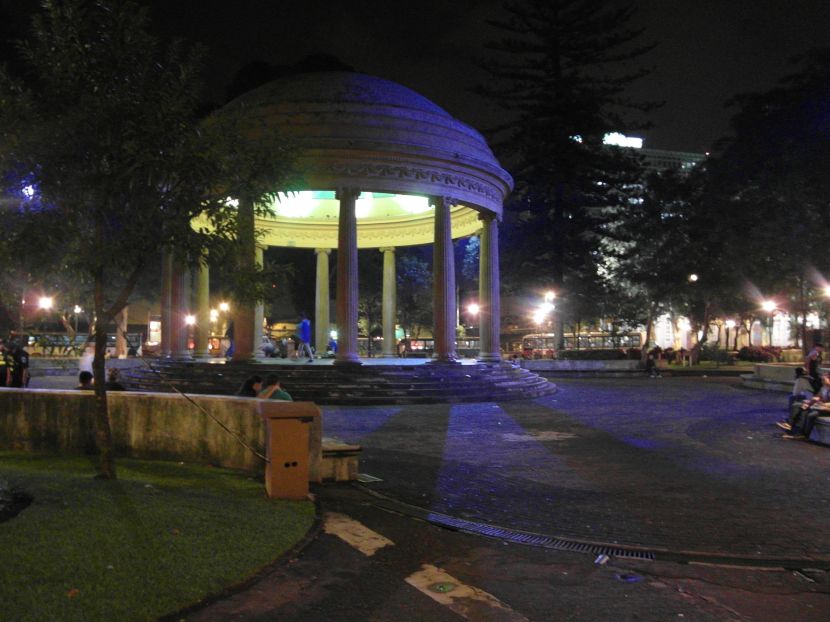
The Park Morazán quickly became my favorite place to sit down and watch the crowd hanging out with their friends, juggling with pins, trying out a trick with the skateboard once in while, and mostly just relaxing. There are of course parks in north also, but somehow I felt that these people were more home with this idleness thing. Let me put it this way: When my friends go to a park to chill out it is an event, something out of ordinary, but for these people this was the ordinary. For them nothing was more natural than to waste the day away without any purposeful activity in their minds.

People of Park Morazán

We westerners are always busy achieving something. We put much effort into generating more cost-effective ways of accomplishing our tasks. Whether it is the cultural legacy of living in the harsh conditions of the north, the religious influence of protestantism, or something else, our culture has chosen to emphasize accomplishment. It has made life of achievement honorable and measures success in life much through what one is able to achieve. In fact, the whole phrase ´success in life´ is a symptom of this worldview.

One of the foremost authorities of the psychology behind happiness, Martin Seligman, recently proposed that human well-being consists of five elements that we pursue for their own sake: positive emotions, engagement, accomplishment, positive relationships and meaningfulness.

Taking this perspective it is easy to see that our western culture is very big on accomplishment, that is the one dimension we are encouraged to chase. The Costa Ricans seemed to offer another cultural solution to what dimensions to emphasize. For them achievement was not such a fetish as it is for us. Future engagement with these people will hopefully reveal what is their cultural fetish but accomplishment it is not – at least not to the same extremes as in the north.

All in all, these Costa Ricans in the park thus held a mirror in front of my face showing me that the life concentrated on achievement is not the only possibility. I could live without the constant latent stress of having to claw my way to the top. I could accomplish less and be more satisfied with whatever the everyday life brings in front of me. That is a genuine possibility for me or you. Merely through their way of being, the Costa Ricans had thus succeeded in showing me that another way of appreciating life does exist.

Park Morazán by dayDuring my first days in San José, the capital of Costa Rica, I did what I always like to do when arriving to a new city and culture: I wandered around aimlessly through the streets, looking at people in their everyday activities hoping to capture something of the local atmosphere. What I found startling here was the idleness of many people; the way they just sat there – seemingly satisfied – in parks, in front of their houses, on the streets, everywhere. I realized that one central difference between Costa Ricans and us Northerners is certain relaxation as regards one´s life.

The Park Morazán quickly became my favorite place to sit down and watch the crowd hanging out with their friends, juggling with pins, trying out a trick with the skateboard once in while, and mostly just relaxing. There are of course parks in north also, but somehow I felt that these people were more home with this idleness thing. Let me put it this way: When my friends go to a park to chill out it is an event, something out of ordinary, but for these people this was the ordinary. For them nothing was more natural than to waste the day away without any purposeful activity in their minds.

People of Park Morazán

We westerners are always busy achieving something. We put much effort into generating more cost-effective ways of accomplishing our tasks. Whether it is the cultural legacy of living in the harsh conditions of the north, the religious influence of protestantism, or something else, our culture has chosen to emphasize accomplishment. It has made life of achievement honorable and measures success in life much through what one is able to achieve. In fact, the whole phrase ´success in life´ is a symptom of this worldview.

One of the foremost authorities of the psychology behind happiness, Martin Seligman, recently proposed that human well-being consists of five elements that we pursue for their own sake: positive emotions, engagement, accomplishment, positive relationships and meaningfulness.

Taking this perspective it is easy to see that our western culture is very big on accomplishment, that is the one dimension we are encouraged to chase. The Costa Ricans seemed to offer another cultural solution to what dimensions to emphasize. For them achievement was not such a fetish as it is for us. Future engagement with these people will hopefully reveal what is their cultural fetish but accomplishment it is not – at least not to the same extremes as in the north.

All in all, these Costa Ricans in the park thus held a mirror in front of my face showing me that the life concentrated on achievement is not the only possibility. I could live without the constant latent stress of having to claw my way to the top. I could accomplish less and be more satisfied with whatever the everyday life brings in front of me. That is a genuine possibility for me or you. Merely through their way of being, the Costa Ricans had thus succeeded in showing me that another way of appreciating life does exist.

Park Morazán by day

The mystery of the Costa Rican happiness

Dios te ama – God loves you! With these words I was greeted into Costa Rica after my long flight. The mystery about Costa Rica that I travelled across the Atlantic to solve is about happiness. According to different polls, namely, Costa Ricans are a happy bunch of people. In Gallup’s much quoted Global Well-being survey, Costa Rica ranks sixth, far above what would be expected in terms of its economic situation – and far above such countries as United States, Britain or Germany. The other countries in the top five – Denmark, Sweden, Norway, Netherlands and Finland – are among the richest and most economically equal societies in the world so their success is easy to understand but Costa Rica seems to have produced almost the same amount of happiness with far smaller Gross Domestic Production. In addition, if we combine life satisfaction with measures of the ecological footprint like Happy Planet Index has done, Costa Rica comes out as number one in the world.

Another cultural anomaly coming through in statistics is the fact that in Hofstede’s cultural dimension of ’masculinity versus femininity’ Costa Ricans rank – unlike other Latin American countries with their machismo image – among the countries with the most feminine values (interestingly, the top six countries in both the well-being survey and Hofstede’s femininity dimension are exactly the same. Could this be a mere coincidence?). The shortcomings of these self-reporting surveys are of course well-known and it might be disputed whether they tap into happiness at all. But at least it can be stated that there is something interesting and unique going on in Costa Rica in terms of cultural valuations and happiness.

But back to the park Morazán in the centre of San José in which I sat relaxing after the long flight drinking an ice tea. The park alone offered me three different insights into Costa Rican happiness. Firstly, the greeters with a message from God were young Salvation Army members who invited me to their church. Naturally, I accepted the invitation despite the almost total language barrier between us. More of that later. But their mere presence in the park reminded me of the strong influence religion has in this country and in these people’s lives. Religion has been found on average to increase people’s happiness within the nations so perhaps religiousness was one building block in Costa Rican happiness.

I found the second key to explain Costa Rican happiness whilst observing the other people in the park. Certain easiness of being characterized the faces of these people who hanged there with no hurry whatsoever. In contrast to us northerners who always are a bit tense and on our way to the next achievement, these people seemed to be completely at home in wasting away a proper working day in the park. More about this theme in the next post but I believe that in this attitude of not taking one’s achievements too seriously one can find much potential for better well-being.

Park Morazán in the evening

Later in the evening when the sun had already started to lighten other continents, I passed by the same park on my way back to the hotel. Gone were the happy youthful people with their skateboards and juggling balls. Instead, an ominous group consisting of prostitutes, pimps and drug-dealers seemed to have taken over the place. In fact, it looked exactly like a place where a western tourist like me finds himself facing a knife or a gun and quickly surrenders all his valuables. I turned around looking as confident as possible and took the next available taxi and got safely to my bed. My hotel was only a few blocks away from the center but the locals as well as my travel senses advised me to take a taxi always in the evening.

The possibility of being robbed was all too much present in many areas of San José. For a guy like me, who is used to live in Finland where armed robberies are relatively unheard of, such constant sense of fear would have a strong negative effect on one’s well-being. Safety is among the most basic needs of humans so disturbances in one’s sense of safety ought to have a remarkable negative impact on one’s happiness. How could they be happy if they always have to be careful and vigilant in the streets to avoid robbery?

Ease of living and religion on the one hand, criminality and unsafeness on the other, the mystery behind Costa Rican happiness had found its first dimensions. I felt sure that I would crack the mystery of Costa Rican happiness in no time…

Dios te ama – God loves you! With these words I was greeted into Costa Rica after my long flight. The mystery about Costa Rica that I travelled across the Atlantic to solve is about happiness. According to different polls, namely, Costa Ricans are a happy bunch of people. In Gallup’s much quoted Global Well-being survey, Costa Rica ranks sixth, far above what would be expected in terms of its economic situation – and far above such countries as United States, Britain or Germany. The other countries in the top five – Denmark, Sweden, Norway, Netherlands and Finland – are among the richest and most economically equal societies in the world so their success is easy to understand but Costa Rica seems to have produced almost the same amount of happiness with far smaller Gross Domestic Production. In addition, if we combine life satisfaction with measures of the ecological footprint like Happy Planet Index has done, Costa Rica comes out as number one in the world.

Another cultural anomaly coming through in statistics is the fact that in Hofstede’s cultural dimension of ’masculinity versus femininity’ Costa Ricans rank – unlike other Latin American countries with their machismo image – among the countries with the most feminine values (interestingly, the top six countries in both the well-being survey and Hofstede’s femininity dimension are exactly the same. Could this be a mere coincidence?). The shortcomings of these self-reporting surveys are of course well-known and it might be disputed whether they tap into happiness at all. But at least it can be stated that there is something interesting and unique going on in Costa Rica in terms of cultural valuations and happiness.

But back to the park Morazán in the centre of San José in which I sat relaxing after the long flight drinking an ice tea. The park alone offered me three different insights into Costa Rican happiness. Firstly, the greeters with a message from God were young Salvation Army members who invited me to their church. Naturally, I accepted the invitation despite the almost total language barrier between us. More of that later. But their mere presence in the park reminded me of the strong influence religion has in this country and in these people’s lives. Religion has been found on average to increase people’s happiness within the nations so perhaps religiousness was one building block in Costa Rican happiness.

I found the second key to explain Costa Rican happiness whilst observing the other people in the park. Certain easiness of being characterized the faces of these people who hanged there with no hurry whatsoever. In contrast to us northerners who always are a bit tense and on our way to the next achievement, these people seemed to be completely at home in wasting away a proper working day in the park. More about this theme in the next post but I believe that in this attitude of not taking one’s achievements too seriously one can find much potential for better well-being.

Park Morazán in the evening

Later in the evening when the sun had already started to lighten other continents, I passed by the same park on my way back to the hotel. Gone were the happy youthful people with their skateboards and juggling balls. Instead, an ominous group consisting of prostitutes, pimps and drug-dealers seemed to have taken over the place. In fact, it looked exactly like a place where a western tourist like me finds himself facing a knife or a gun and quickly surrenders all his valuables. I turned around looking as confident as possible and took the next available taxi and got safely to my bed. My hotel was only a few blocks away from the center but the locals as well as my travel senses advised me to take a taxi always in the evening.

The possibility of being robbed was all too much present in many areas of San José. For a guy like me, who is used to live in Finland where armed robberies are relatively unheard of, such constant sense of fear would have a strong negative effect on one’s well-being. Safety is among the most basic needs of humans so disturbances in one’s sense of safety ought to have a remarkable negative impact on one’s happiness. How could they be happy if they always have to be careful and vigilant in the streets to avoid robbery?

Ease of living and religion on the one hand, criminality and unsafeness on the other, the mystery behind Costa Rican happiness had found its first dimensions. I felt sure that I would crack the mystery of Costa Rican happiness in no time…

Leaving home and learning to appreciate what we have

The hardest part of a journey is usually the start. This is true in two senses of the word: Firstly, there are always so many excuses not to travel – the lack of money, risks ahead, study, work or family commitments and so forth – that many people never leave their home. These are obstacles that can always be arranged, if one just has a strong enough vision. Don’t take my word for it, ask Dervla Murphy who in addition to bicycling alone from Ireland to India in 1963 also travelled 1500 miles by foot in Peru with her nine-year old daughter. It must though be noted that her daughter Rachel rode the first six hundred miles with a pony before becoming a pedestrian.

Secondly, leaving is hard because one has to say farewell to so many dear people whom one doesn’t see for months. The last weeks before the trip are always filled with sad partings in which both realize how long it will be before we meet again. Should one say some kind words – or just shake hands in silence with a manly firmness? These are moments I have never learned to handle with elegance, I am always a bit unsure of how to get through them and how to really show the other how much I care about him or her.

One of the main reasons to travel, however, are precisely these good-byes. The human psychology is built in such a way that we often are unable to appreciate that which we have. We grow so used to having the good people around us and getting their attention and love that we start to take it for granted. We no longer see how much their presence really gives to us and in how many ways they enrich our lives. You do not learn to appreciate something before you don’t have it – and traveling is a way of departing from that which you have for a while and thus learn to appreciate it anew.

This is connected to one of the things that modern well-being psychologists have emphasized, namely the fact that in terms of happiness, ”the human mind is extraordinarily sensitive to changes in conditions, but not so sensitive to absolute levels” as Jonathan Haidt puts it. In other words, most of the things we have – especially our material wealth – don’t affect our happiness in the long term because we grow used to them. To change our happiness permanently we should not change the amount of things we have but our relation to the things we have. One can learn oneself to take a more appreciative attitude towards one’s life – for example through the simple exercise of once a week writing down five things one is gratetuf for. Simple as it may sound, this kind of exercises have been found to increase people’s satisfaction with life, their optimism and even their physical health.

Traveling – I argue – is one of the best ways to learn to appreciate more what one already has. As the travel writer Paoul Theroux notes: ”One of the greatest rewards of travel is the return home to the reassurance of family and old friends, familiar sights and homely comforts and your own bed.” But to get there, you first have to travel.The hardest part of a journey is usually the start. This is true in two senses of the word: Firstly, there are always so many excuses not to travel – the lack of money, risks ahead, study, work or family commitments and so forth – that many people never leave their home. These are obstacles that can always be arranged, if one just has a strong enough vision. Don’t take my word for it, ask Dervla Murphy who in addition to bicycling alone from Ireland to India in 1963 also travelled 1500 miles by foot in Peru with her nine-year old daughter. It must though be noted that her daughter Rachel rode the first six hundred miles with a pony before becoming a pedestrian.

Secondly, leaving is hard because one has to say farewell to so many dear people whom one doesn’t see for months. The last weeks before the trip are always filled with sad partings in which both realize how long it will be before we meet again. Should one say some kind words – or just shake hands in silence with a manly firmness? These are moments I have never learned to handle with elegance, I am always a bit unsure of how to get through them and how to really show the other how much I care about him or her.

One of the main reasons to travel, however, are precisely these good-byes. The human psychology is built in such a way that we often are unable to appreciate that which we have. We grow so used to having the good people around us and getting their attention and love that we start to take it for granted. We no longer see how much their presence really gives to us and in how many ways they enrich our lives. You do not learn to appreciate something before you don’t have it – and traveling is a way of departing from that which you have for a while and thus learn to appreciate it anew.

This is connected to one of the things that modern well-being psychologists have emphasized, namely the fact that in terms of happiness, ”the human mind is extraordinarily sensitive to changes in conditions, but not so sensitive to absolute levels” as Jonathan Haidt puts it. In other words, most of the things we have – especially our material wealth – don’t affect our happiness in the long term because we grow used to them. To change our happiness permanently we should not change the amount of things we have but our relation to the things we have. One can learn oneself to take a more appreciative attitude towards one’s life – for example through the simple exercise of once a week writing down five things one is gratetuf for. Simple as it may sound, this kind of exercises have been found to increase people’s satisfaction with life, their optimism and even their physical health.

Traveling – I argue – is one of the best ways to learn to appreciate more what one already has. As the travel writer Paoul Theroux notes: ”One of the greatest rewards of travel is the return home to the reassurance of family and old friends, familiar sights and homely comforts and your own bed.” But to get there, you first have to travel.

The beginning of a journey

Sometimes a man has to go. Sometimes a man needs a purpose to go. I am going to Central America, to Costa Rica and Nicaragua. The purpose of my journey is to learn more about the local culture, the way they live their lives and the way they think about vital issues such as happiness, morality and good life.

What makes Costa Ricans happy, what is their measure of success? What kind of attitudes do Nicaraguans have towards life’s big issues: family, work, friendship and death? What kind of things do they value, what is sacred for them? And of course: What can we learn about our own lives and our own deeply-held values and attitudes by comparing them with the Central-American culture? In other words, what can we learn from them in terms of how to live a good life ourselves? These are the questions I will be examining.

My mission in life is to explore novel ways of thinking that enable people to better understand how to live their life in a good way. I aim to find fruitful ways to answer the ancient question about what is good life and how to live one’s life. The journey I will now be taking is a part of this mission. Through absorbing myself to the Central American culture for a couple of months I hope to widen my perspective and thus be able to think about these basic questions in a more open and wide-reaching way.

This blog will be a report of this journey. I hope to give the reader two things: (1) To broaden her or his perspective about what good life could be about. (2) To give practical insights into how to live a better life within one’s own life-situation, whatever that situation is.

How then to live your life? Truth to be told, there is no such thing as one correct way of living. Everyone must carve their own path. As Zarathustra said:

”This is just my way, where is yours?” Thus did I answer to those who asked me ”the way.” For the way – it does not not exist!

Sometimes a man has to go. Sometimes a man needs a purpose to go. I am going to Central America, to Costa Rica and Nicaragua. The purpose of my journey is to learn more about the local culture, the way they live their lives and the way they think about vital issues such as happiness, morality and good life.

What makes Costa Ricans happy, what is their measure of success? What kind of attitudes do Nicaraguans have towards life’s big issues: family, work, friendship and death? What kind of things do they value, what is sacred for them? And of course: What can we learn about our own lives and our own deeply-held values and attitudes by comparing them with the Central-American culture? In other words, what can we learn from them in terms of how to live a good life ourselves? These are the questions I will be exploring.

My mission in life is to explore novel ways of thinking that enable people to better understand how to live their life in a good way. I aim to find fruitful ways to answer the ancient question about what is good life and how to live one’s life. The journey I will now be taking is a part of this mission. Through absorbing myself to the Central American culture for a couple of months I hope to widen my perspective and thus be able to think about these basic questions in a more open and wide-reaching way.

This blog will be a report of this journey. I hope to give the reader two things: (1) To broaden her or his perspective about what good life could be about. (2) To give practical insights into how to live a better life within one’s own life-situation, whatever that situation is.

How then to live your life? Truth to be told, there is no such thing as one correct way of living. Everyone must carve their own path. As Zarathustra said:

”This is just my way, where is yours?” Thus did I answer to those who asked me for ”the way.” For the way – it does not not exist!

Median viihteellisyyttä tulisi säädellä, koska se tyhmentää kansakuntaa

Tietämättömyydestä on tullut hyve. Kansanedustaja Teuvo Hakkaraisesta kapitalisti Björn Wahlroosiin mielipidevaikuttajat oikein ylpeilevät sillä, että heidän poliittinen kannanottonsa ei perustu asioista perillä olemiseen, vaan naiiviin asenteellisuuteen. Johanna Korhonen nostaa esiin tämän huolestuttavan ilmiön, jossa ”tieto ja sivistys eivät ole arvo, vaan yksi näkökulma muiden joukossa.” Yksi syyllinen tähän on median kaupallistuminen ja esimerkiksi tosi-TV:t, jotka tekevät tyhmyydestä sankaritarinoita.

Aiemmassa maailmassa mediatilaa jaettiin ihmisille erityisesti poliittisissa kysymyksissä asiantuntijuuden ja meriittien perusteella. Yliopiston professorit olivat kysyttyjä kommentaattoreita ja heille annettiin riittävästi TV-aikaa tai palstamillimetrejä näkökulmansa selittämiseen. Nykyään tärkeintä ei ole mielipiteen viisaus, vaan myyvyys. Iskevä slogan päätyy osaksi uutiskatsausta, koska syvempi analyysi ”ei ole käyttistä matskua”.

Taustalla on markkinatalouden rautakoura. Media-alan toimijat joutuvat tekemään valintojaan kahden keskenään ristiriitaisen tavoitteen välillä: Aliarvioimalla kansakunnan älykkyyden syntyy kaupallisesti menestyneintä sisältöä. Syntyy Big Brothereita, viihde-’uutisia’, ja höyrypäitä poliittisia julkkiksia. Yliarvioimalla kansakunnan älykkyyden syntyy valistavaa ja sivistävää mediasisältöä, joka lisää ihmisten kykyä ymmärtää maailmaa ja sen toimintamekanismeja. Nykyisessä uusliberalistisessa ilmapiirissä ensinmainittu valinta on yleistynyt silmiinpistävästi.

Meillä ei ole varaa heittää sivistystä roskakoriin. Siksi mielestäni on vain kaksi vaihtoehtoa: Joko mediatalojen on suoraselkäisemmin ilmoitettava, että heillä on muitakin päämääriä kuin osakkeen arvo. Heidän on linjattava vahvasti, että he ovat valmiita tinkimään tuottavuudesta, jotta he tuottaisivat korkeatasoista sisältöä. Että he valitsevat mieluummin osakkeen hinnan laskun kuin sisällön laadun laskun.

Vaihtoehtoisesti valtion on tiukemmin ryhdyttävä säätelemään mediaa sen suhteen, kuinka paljon kansakuntaa tyhmentävää viihdettä se saa esittää. Ehkä parasta olisi perustaa hallituksesta erillinen media-alan säännöstelyelin, joka päättäisi mitä TV-ohjelmia kotimaiset kanavat saavat lähettää. Jokainen ohjelmanikkari saisi sitten mennä sinne hattu kourassa selittämään, miksi hänen viihdeohjelmansa sivistää – ei tyhmennä – kansakuntaa. Vain viihdeohjelmat, joiden sivistävän vaikutuksen todettaisiin olevan positiivinen tai vähintään neutraali sallittaisiin. Kansa ansaitsee tulla sivistetyksi ei tyhmennetyksi.

Itseään korostavat joukkomurhaajat: Pitäisikö tekijä häpäistä?

Miten pohjoismainen hyvinvointivaltio voi estää turhaan viattomia ihmisiä tappavat itsensäkorostajat? Tämä kysymys lienee jokaisella mielessä viimeisen tapauksen jälkeen. Eräs vastaus on: häpäisemällä tekijä julkisesti mahdollisimman nöyryyttävällä tavalla. Vastaus on yllättävä ja totuttuja oikeusnormejamme vastaan, mutta äärimmäiset teot vaativat äärimmäisiä vastatoimia. Selvitetäänpä siis miksi tämä voisi toimia.

Ihminen on luontaisesti myötätuntoa kokeva olento, mutta kulttuurit ovat kaikkina aikoina vahvistaneet tätä luontaista kapasiteettia erilaisin tavoin. Länsimainen moraali on viimeiset vuosisadat perustunut kristillisen tradition pohjalta nousevaan syyllisyys-etiikkaan. Kasvatuksen kautta omaksumme tietyt normit ja syvän syyllisyyden tunteen, joka iskee meihin väkisin, kun näitä normeja rikomme. Uskonnon vallan heikkenemisen, kriittisen kulttuuriliikkeen ja yleisen koulutustason kasvun vuoksi tämä sisäänrakennettu moraali on kuitenkin menettänyt otettaan ihmisistä. Useimmissa tapauksissa sen jättämää tyhjiötä täyttää omakohtaisemmin omaksuttu vastuuntunto, mutta joissakin tapauksissa kehitys kulkee kieroon.

Uskon, että kaikkia viimeaikaisia turhaan tappajia on elähdyttänyt primitiivisempi häpeä-kunnia -moraliteetti. Häpeän ja syyllisyyden ero on siinä, että häpeää tunnemme ihmisten edessä, kun syyllisyyden kohtaamme yksin. Samoin kunniaa tunnemme toisten ihmisten silmien kautta. Nämä nuoret miehet ovat olleet jonkinlaisia hylkiöitä, jotka eivät ole kestäneet sitä että ympäröivä yhteisö ei ole kunnioittanut heitä. Heidän tekonsa on ollut äärimmäinen keino lunastaa paikkansa yhteisössä, saada ihmiset kunnioittamaan heitä. Sillä vaikka voimme vihata heitä, samalla heidän tekonsa herättää samanlaista kunnioitusta kuin jonkin vihollisemme ääriteko.

Kun lehtien palstat taas täyttyvät uutisista, joissa käydään lävitse tekijän luonnetta, kasvuolosuhteita, mielipiteitä ja itse tekoa, luomme tahtomattammekin tietyn kunnioituksen ilmapiirin tekijän ympärille. Nykynuorison tärkeimpiä haaveita on tulla julkkikseksi, ja nämä nuoret kirjoittavat nimensä lehtien kansiin ja ihmisten mieliin. Jokainen raportoitu teko siis valitettavasti inspiroi toisia nuoria ja näin lisää todennäköisyyttä uusille turha-murhille.

Siksi ratkaisu on riisua heidät kaikesta kunniotuksesta. Emme kuitenkaan voi lopettaa asioista uutisoimista ja vaieta tapauksia kuoliaiksi. Jos – hypoteettisena ja äärimmäisenä esimerkkinä – riisuisimme tekijän alasti ja sijoittaisimme hänet julkiselle paikalle niin, että kaikki näkisivät hänen sukupuolielimensä, olisi tämä omiaan nöyryyttämään tekijän perusteellisesti. Esimerkin aikaansaama peloitevaikutus omien sukupuolielimien paljastumisesta voisi kohtuullisen tehokkaasti estää muita vastaavia tekoja harkitsevia toteuttamasta fantasioitaan.

Tiedän, että tämänkaltainen ratkaisu ei sovi lainkaan yhteen länsimaisen oikeuskäytännön kanssa, joka on systemaattisesti purkanut kaikki keskiaikaiset (jolloin elimme vielä häpeä-moraalin aikaa) häpeärangaistukset. Mutta jos mietit hetken näiden turha-murhaajien psykologista profiilia, voit ehkä ymmärtää että tällaisella keinolla tämänkaltaiset teot voitaisiin ehkä saada loppumaan. Se olisi niin arvokas päämäärä, että koen, että meidän tulee avoimesti miettiä kaikkia keinoja, joilla näin monia turhia kuolemia voitaisiin tulevaisuudessa välttää.

Miksi on niin tärkeätä edistää yhteisöllisyyttä nyky-Suomessa?

Koen työni perimmäisen tarkoituksen löytyvän ihmisten elämänlaadun parantamisesta. Tässä työssäni yhteisöllisyys on yhä vahvemmin noussut yhdeksi keskeisimmistä teemoistani. Miksi? Yhden vastauksen tarjoaa Richard Florida, jonka mukaan ihmisten asuinpaikan laatuun vaikuttaa neljä keskeistä seikkaa: perustarpeet, yhteisöllisyys, virikkeet sekä vapaus.

Länsimaisena nuorena kolme näistä on ollut sukupolvelleni itsestäänselvyyksiä. Vaikka Suomessa leipäjonot ovat pidentyneet ja kodittomia riittää, olemme pääosin edenneet sellaiseen yhteiskunnalliseen tilaan, jossa perustarpeemme lepäävät melko varmalla pohjalla. Köyhästä maatalouskansakunnasta ja sotien jälkeisestä puutostilasta olemme nousseet tilanteeseen, jossa maatamme kutsutaan hyvinvointivaltioksi. Mitä tulee virikkeisiin, niiden osalta omaa aikakauttamme ei voi verrata mihinkään muuhun aikaan. Nykymaailma on niin täyteenahdettu erilaisia virikemahdollisuuksia, että ainoa ongelma on runsaudenpulasta seuraava valinnanvaikeus ja ahdistus. Ja vapauskin on muuttunut itsestäänselvyydeksi. Mahdollisuus ilmaista mielipiteensä vapaasti ja toteuttaa erilaisia persoonallisuuteen, poliittisen näkökantaan, seksuaalisen suuntautumiseen tai muuhun seikkaan perustuvia elämäntapoja ei liene koskaan ollut suurempi kuin nykyaikana. Vaikka matkaa täydellisyyteen toki on, kaikkien kolmen osalta pitkäaikainen trendi on siis ollut selkeästi parempaa kohti.

Sen sijaan yhteisöllisyyden suhteen yhteiskuntamme tuntuu rapautuvan. Florida esittelee tutkimuksia, joiden mukaan niiden amerikkalaisten määrä, jotka kokivat olevansa ”sosiaalisesti eristäytyneitä” yhteisöistään on noussut 25 prosentista vuonna 1985 yli 50 prosenttiin vuonna 2004. Myös naapureitaan tuntevien määrä on laskenut selvästi samana aikana. Florida ei luonnollisesti käy läpi suomalaisten tilannetta, mutta oma tuntumani on, että vastaava kehitys – vaikkakaan ei ehkä yhtä dramaattisena – on käsillä meilläkin. Yleisesti koen, että nykykulttuurimme sisältää liikaa yksilöllisyyttä ja toisien yläpuolelle asettumista korostavia rakenteita. Näen, että ihmiset itse eivät voi hyvin silloin kuin he kulttuurinsa ohjaamana pyrkivät kieltämään lähtökohtaisen riippuvuutensa ja myötätuntonsa kanssaeläjiään kohtaan. Yhteiskunnallisella tasolla näen, että hyvinvointivaltio edellyttää rakenteiden lisäksi ihmisten aitoa halua rakentaa tätä maata yhdessä. Tätä kautta rapautuva yhteisöllisyys uhkaa sitä yhteiskuntamallia, jonka eteen viimeiset pari sukupolvea ovat tehneet hartiavoimin töitä.

Jonakin toisena ajankohtana tai toisessa maailmankolkassa olisin siis maailmanparantamisen projektissani saattanut päätyä johonkin muuhun keskusteemaan. Olisin saattanut pohtia keinoja perustarpeiden tyydyttämisen varmistamiseksi tai taistella ilmaisunvapauden puolesta. Meidän aikanamme ja meidän yhteiskunnassamme olen kuitenkin yhteisöllisyydestä löytänyt sellaisen teeman, jonka puolesta puhuessani koen tekeväni jotakin arvokasta. Toivon olevani osa sitä liikettä, joka onnistuu tekemään yhteisöllisyyden edistämisestä oman aikamme suuren kertomuksen.

Olenko onnellinen? Riippuu kumpaa onnellisuutta tarkoitetaan

Lauantaina vedin yhdessä Lauri Järvilehdon kanssa kesäseminaarin otsikolla ’onnellisuus ja merkitys’. Tauolla eräs osallistuja kysyi minulta, olenko itse onnellinen. Hetken mietittyäni vastasin, että olen kyllä onnellinen, mutta oikeastaan olen tietoisen päätöksen kautta vähemmän onnellinen kuin nuorempana. Halusin nimittäin opiskella filosofiaa, vaikka tiesin sen tekevän minut onnettomammaksi.

Aloittaessani filosofian opinnot olin huoleton, yltiöpositiivinen ja iloluonteinen nuori mies, joka tykkäsi juhlia, urheilla ja pitää hauskaa. Ymmärsin, että filosofia toisi elämääni ahdistusta, eksistentiaalisia kriisejä, vähenevän kyvyn nauttia monista ihmisiä perinteisesti ilahduttavista asioista ja kompleksisemman suhteen kanssaihmisiini. Nyt kun olen filosofiaa kohta kymmenen vuotta opiskellut, on todettava, että ennustukseni piti kaikin osin paikkansa. Miksi sitten lähdin lukemaan filosofiaa, jos tiesin ettei se edistäisi onnellisuuttani?

Kysymykseen voi vastata kahdella tavalla. Ensinnäkin koin että minulla ei ollut valinnanvaraa, en olisi voinut toimia toisin. Filosofia kutsui minua liian voimakkaasti, jotta olisin kyennyt siitä kieltäytymään. En siis niinkään tehnyt valintaa kuin seurasin sisäistä pakkoa. Filosofia oli siis minulle kutsumus, jonka vuoksi olin valmis uhraamaan jopa oman onnellisuuteni.

Toiseksi, sekä antiikin ajattelijat että nykypsykologit jaottelevat onnellisuuden käsitteen kahteen osaan, joista ensimmäinen kuvaa onnellisuutta positiivisten ja negatiivisten tunteiden välisenä kilvoitteluna. Mitä harvemmin negatiiviset tunteet ottavat vallan yksilöstä ja mitä useammin häntä elävöittää positiivinen tunne, sitä onnellisempi hän on. Tämän onnellisuuskäsitteen valossa on totta, että filosofia on tehnyt minut onnettomammaksi.

Onnellisuus voidaan kuitenkin ymmärtää myös eudaimonisemmin, kytkeytyneenä ihmisen kykyyn toteuttaa itseään ja tehdä jotakin arvokasta. Positiivinen psykologi Martin Seligman kutsuu tätä onnellisuuden muotoa merkityksellisyydeksi ja näkee sen olevan itseisarvoinen ihmiselämän pyrintö. Merkityksellisyyden tavoittelu ei siis ole redusoitavissa pelkkiin positiivisiin tunteisiin, vaan on niistä itsenäinen hyvän elämän osa-alue. Tähän onnellisuus-käsitykseen nähden onnellisuuteni on filosofian myötä lisääntynyt.

Uskon, että eri ihmiset ovat eri määrin kiinnostuneita näistä eri onnen muodoista. Monille ihmisille tuo positiivisten tunteiden taso on elämän keskeinen suunnanantaja. He kykenevät kyllä tarvittaessa kevyesti keskustelemaan elämän syvemmistä merkityksistä – se on hetkellisen hauska ajanviete -, mutta he eivät tunne tuon kysymyksen synnyttämää poltetta rinnassa. He eivät menetä yöunia sen vuoksi. Toiset – kuten minä – ovat vahvasti merkitysohjautuvia elämässään. He kokevat elämänsä tyhjäksi, vaikka siinä olisi kuinka paljon positiivista tunnetta, jos eivät kykene kytkeytymään johonkin syvästi merkitykselliseen.

Väärinkäsitysten välttämiseksi todettakoot, ettei elämäni tuolla onnen ensimmäisellä dimensiollakaan mitään kauheata ole, vaan lienen keskimääräistä useammin positiivisten tunteiden valtaama. Vaikka merkityshakuisuuden dominanssin vuoksi kohtaan ajoittaisia eksistentialistisen kriisin puuskia, on elämäni enimmäkseen iloista ja filosofian kautta myös huomattavasti merkityksellisempää kuin mitä se ilman sitä olisi. Aristotelesta mukailevan maksiimin mukaan kutsumuksesi on siellä missä intohimosi kohtaa maailman tarpeet. Kukin taipumustensa mukaan, minulla tuo kohta löytyi filosofian kautta.